Update Time: 2025-12-09
Digitization Accelerates Across Retail Furniture Spaces
In recent years, digital transformation has become a strategic priority in the retail furniture sector. Globally, electronic shelf label penetration sits at around 15%, with advanced markets like France exceeding 30%. Regions such as North America and the Middle East—key growth zones for high fashion furniture—are still rapidly scaling adoption. Projections suggest the global electronic paper display module market will reach over $3 billion by 2025, driven by:
Rising labor costs: As global aging intensifies labor shortages, especially in furniture retail, ESLs offer a 40% reduction in manual price update labor.
Touch-free retail demand: Post-pandemic shoppers seek contactless price updates and digital self-service, making electronic paper display systems a must-have for physical furniture store displays.
Why Digital Tools Matter in High-Ticket Furniture Categories
In the high-fashion furniture space—where sofas, wardrobes, and dining sets can cost thousands—electronic paper adds more value than simple price tags:
Contextual engagement: QR codes on ESLs link to 3D assembly videos or material guides (e.g., how to care for genuine leather sofas), boosting shopper confidence.
Channel transparency: When online campaigns go live, in-store ESLs can show “Display Only” or “In-Store Exclusive” status, reducing 30% of channel conflict complaints.
What Is a Smart Furniture Store?
A smart store blends retail furniture, digital signage, and automated systems into a cohesive experience. Rather than just static showroom design, smart shops use:
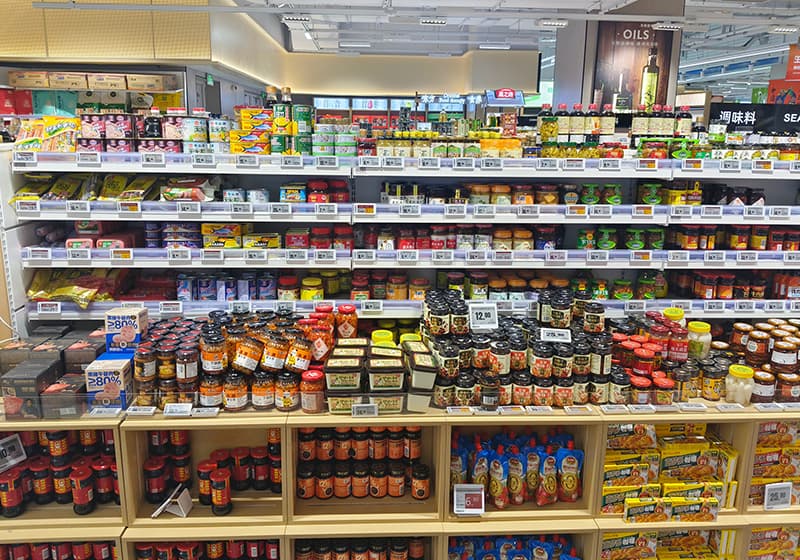
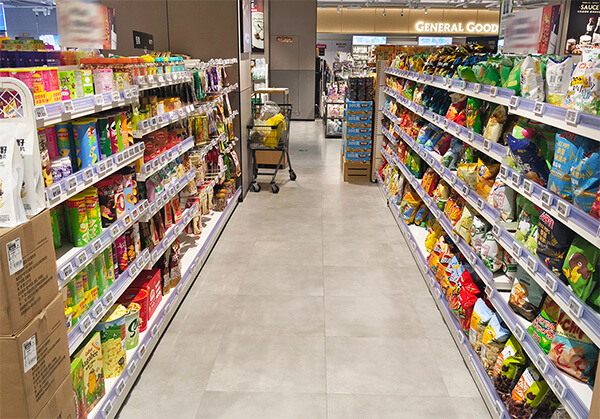
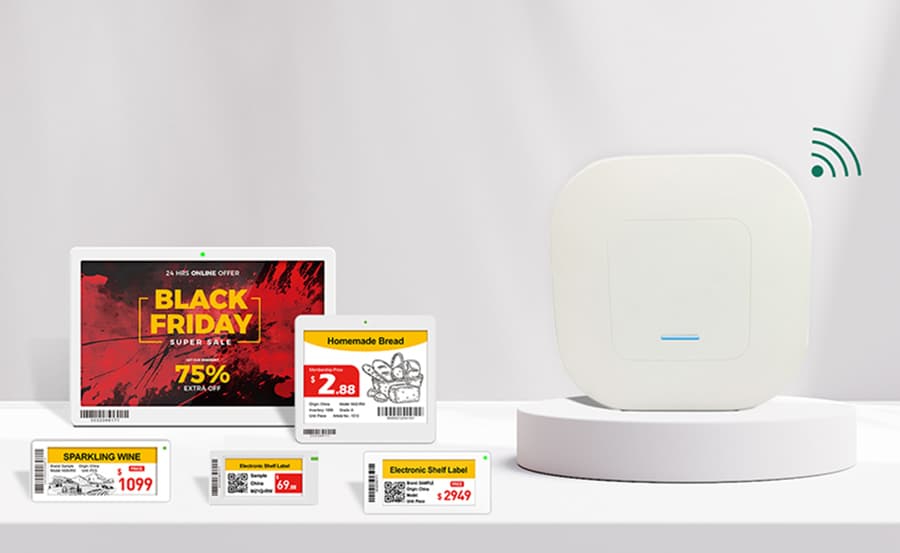
Datallen e-price tags across shelving and display zones.
Sensor-equipped smart shelves that track foot traffic or when display mannequins move.
Digital screens showing product bundles, care information, or flash sales.
These all support furniture store display strategies that are dynamic, data-driven, and increasingly immersive.
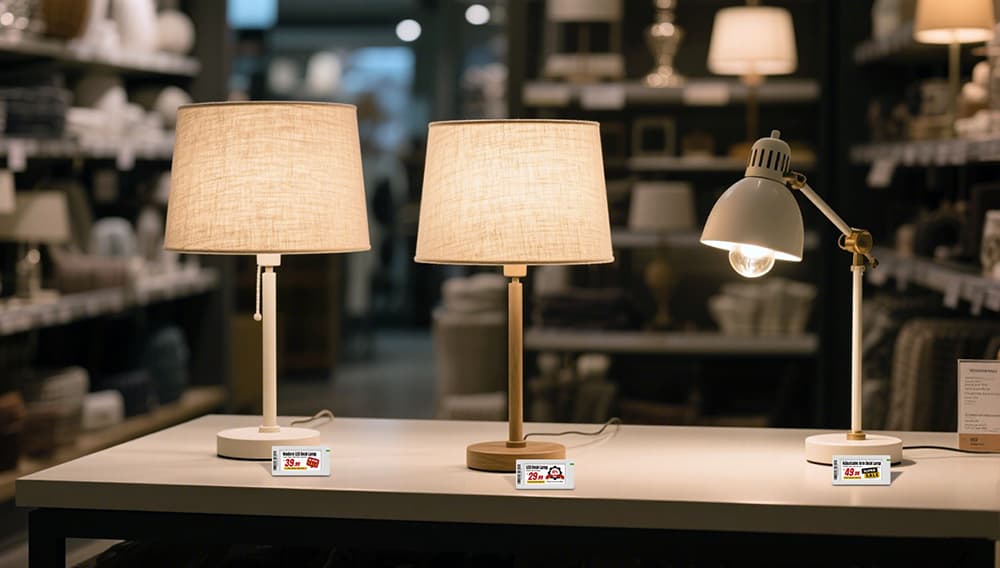
How Electronic Paper Displays Support Retail Digitalization
Electronic paper displays (ESLs) are engineered for low-energy, long-term visual communication in retail environments. Unlike LCD screens that rely on continuous power to maintain visibility, ESLs consume energy only during updates. This makes them ideal for price integrity, sustainability goals, and long-term operational efficiency.
ESLs maintain sharp clarity under direct lighting, allowing customers to read pricing or product specifications from various angles without glare. Combined with wireless update systems, these displays enable retailers to synchronize pricing and product data across stores in real time.
What Retailers Should Evaluate Before Choosing Electronic Paper Displays
Selecting electronic paper displays goes beyond screen size or color capabilities. Retailers and procurement teams should evaluate:
Consideration | Why It Matters | Best-Practice Insight |
Battery Life | Directly impacts maintenance cost and system scalability. | Choose displays rated for 3–5+ years based on update frequency. |
Screen Size & Visibility | Larger product categories (furniture, appliances) require bigger screens for storytelling and pricing. | Evaluate part numbers ranging from 2.1", 4.2", 7.5" up to A5/A4 signage. |
Refresh Speed | Critical for peak-hour updates, promotions, or markdown execution. | Look for systems capable of updating 1,000+ tags in under 30 seconds. |
Communication Stability | Impacts reliability and customer trust. | Systems using 2.4 GHz proprietary links perform better in metal-dense stores. |
Software Integration | Determines whether pricing syncs automatically with your retail ERP or POS. | Ensure compatibility with SAP, Oracle, Shopify Plus, or custom APIs. |
Design Flexibility | Furniture and luxury retail require aesthetic alignment. | Choose customizable layouts, fonts, frames, and product storytelling features. |
| Specification | Typical Range for ESLs | Why It Matters |
|---|---|---|
| Display Size Options | 1.54", 2.13", 4.2", 7.5", 10.2", A5/A4 sizes | Supports different product categories from accessories to furniture |
| Power Consumption | 0 power when static; updates consume minimal energy | Ensures long-term sustainability and low maintenance cost. |
| Battery Life | 5–10 years, depending on update frequency | Direct impact on operational cost and replacement cycle. |
| Color Options | Black/White, Black/White/Red, or Black/White/Yellow | Used to highlight promotions or premium SKU labeling. |
| Update Speed | Under 30 seconds for 1,000+ tags | Critical for large-scale retail and dynamic pricing strategies. |
| Wireless Protocol | 2.4 GHz proprietary system | More stable transmission in large or metal-dense spaces |
Real Promotions, Real Speed: How ESLs Win in Peak Seasons
| Global Event | Furniture Category Opportunities | ESL-Based Solutions |
| Amazon Prime Day (July) | Living Room Sets, Smart Furniture | Dynamic pricing updates every 30 minutes, auto price protection |
| Back-to-School (Aug) | Study Desks, Storage Wardrobes | Bundled pricing with “desk + ergonomic chair” QR-code cart add |
| Labor Day (Sept) | Outdoor Dining Sets, Patio Furniture | Time-based deals with heatmap-informed inventory |
Case in Point: In Prime Day 2024, a global smart furniture chain used ESLs to update prices across 2,000+ stores in 2 minutes, which previously took a 10-person team 4 hours. Result? A 22% increase in average order value on Day 1.
Comparison — Electronic Paper Display vs LCD Digital Signage
| Feature | Electronic Paper Display (ESLs) | LCD Digital Signage |
Power Usage | Ultra-low power; consumes energy only when updating content. | Continuous power is required to maintain visibility. |
Readability in Bright Light | Excellent—paper-like viewing, anti-glare. | May reflect light; best under controlled lighting. |
Ideal Use Case | Pricing, product information, and non-dynamic content. | Promotions, videos, animations, attention-grabbing media. |
Maintenance Cost | Low (fewer cables, long battery life). | Higher electricity and hardware |
Customer Experience | Clean, natural, minimalistic—ideal for showrooms. | High impact and eye-catching—ideal for marketing areas. |
Best practice: Many forward-thinking furniture retailers combine both:
ESLs for pricing consistency and LCD signage for immersive brand storytelling.
Implementation Strategy: Phased Rollout for Maximum ROI
Stage 1: Prioritize Use Cases
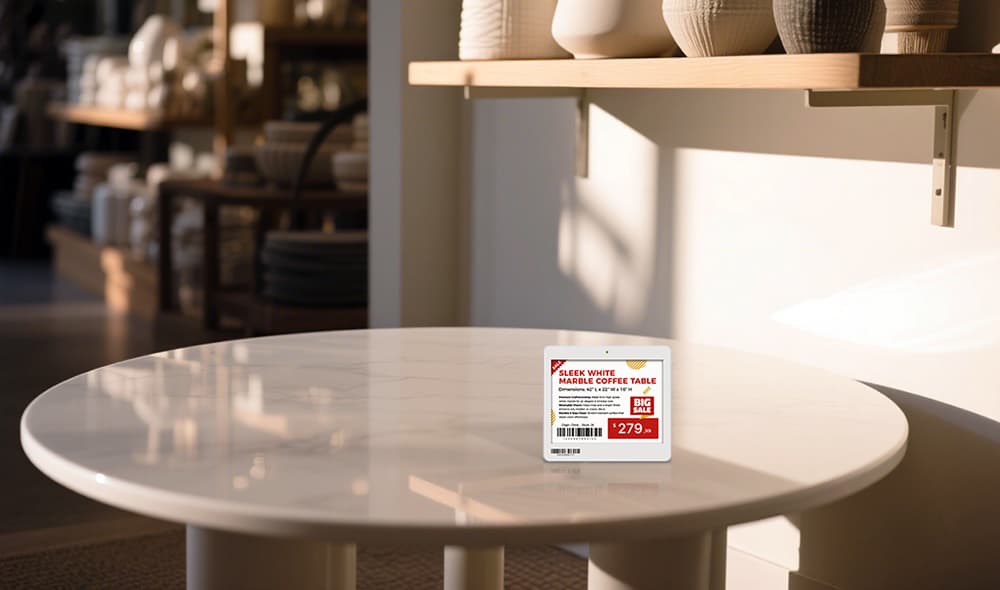
High-frequency markdowns: Display special-edition coffee tables with 4.2" ESLs featuring price flash alerts.
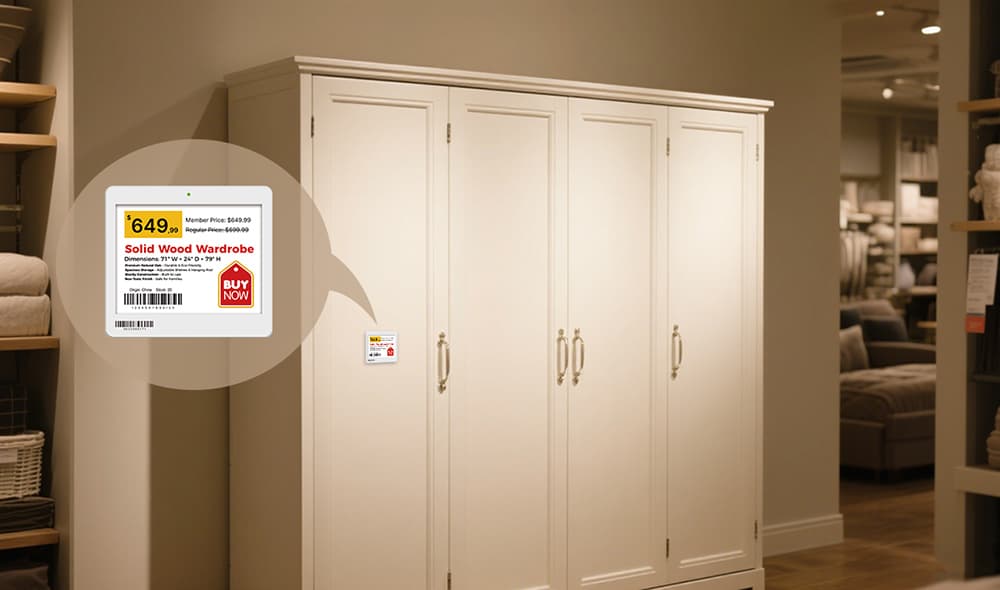
Premium displays: Wardrobe zones use 7.5" color ESLs with embedded AR trial mirrors or scan-to-visualize options.
Stage 2: Optimize Costs
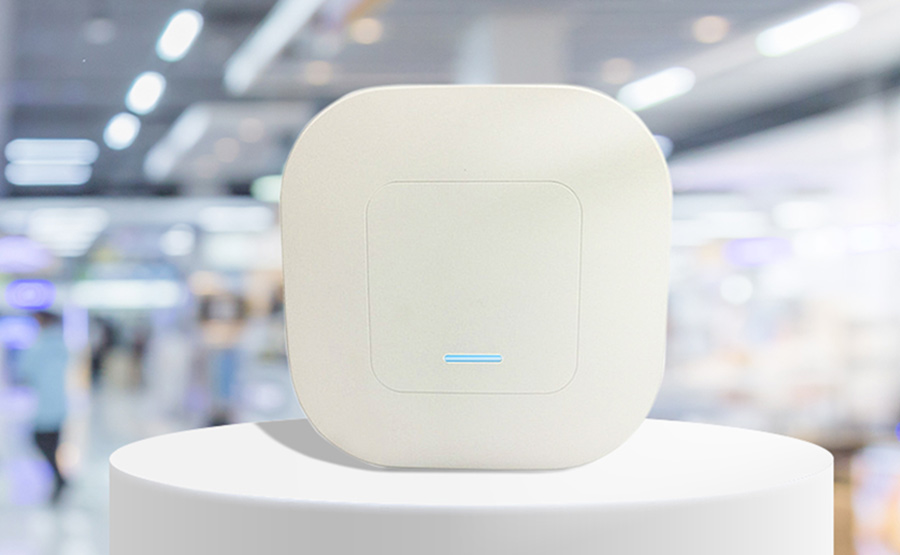
Lightweight deployment: Datallen's LinkBase gateway manages over 4,000 ESLs per device, slashing network setup costs by 30%.
Long battery life: Tags operate with batteries lasting 5–7 years—no regular maintenance needed.
Stage 3: Integrated Ecosystem
ERP → Datallen IoT Hub → Base Station → Tags → Customer Interaction → CRM Data → ERP
Stores using this system saw a 27% increase in repeat purchases by analyzing tag scans and CRM feedback loops.
FAQ: Everything You Need to Know About Electronic Paper Displays
Q1. What is an electronic paper display?
An electronic paper display is a low-power digital screen technology that looks similar to printed paper. It can hold content without using power and remains readable under bright lighting.
Q2. How does an electronic paper display work?
EPDs use microscopic charged particles that move to form text or images. Once the content is displayed, it does not require continuous power, making it different from LCD or LED screens.
Q3. Can electronic paper displays show color?
Most EPDs are monochrome (black and white), while some support additional accent colors like red or yellow. Full-color versions exist but are slower to refresh and more costly.
Q4. Where are electronic paper displays commonly used?
EPDs are used in electronic shelf labels (ESL), retail digital signage, healthcare labeling, logistics systems, smart cities, and consumer devices like e-readers—especially where low power and paper-like readability are needed.
Q5. Are electronic price tag systems difficult to install?
No. Installation is simple and usually takes only a few hours. A single LinkBase gateway can manage thousands of tags with minimal interference and no store disruptions.
Q6. Is the price information reliable and accurate?
Yes. The 2.4 GHz communication system ensures stable transmission. Real-world deployments report error rates below 0.5%, and many retailers report zero pricing disputes after switching to ESLs.
Q7. Will customers accept digital price tags?
Highly likely. Research shows that over 85% of shoppers see ESLs as modern and transparent. Features like QR codes for product details help increase engagement and trust.
Q8. Do digital tags lag during high update demand?
No. Updates can refresh across more than 1,000 tags in under 30 seconds—even during peak shopping hours.
Q9. Is adopting electronic paper price tags common in the furniture retail industry?
Adoption is still emerging, with less than 20% penetration. However, early adopters gain operational agility, faster price execution, improved storytelling, and competitive advantage.
Q10. Are electronic price tag systems energy-efficient?
Yes. EPD screens consume power only when content changes. This means long-term display use requires extremely low energy.
Q11. Can the system be customized for store layout, branding, or product storytelling?
Absolutely. Templates, layout options, media formats, and QR interactions can be tailored for furniture retailers—whether large chains or boutique luxury showrooms.
Q12. How secure is the data in an ESL system?
Modern systems use encrypted communication protocols and secure APIs to protect store data, pricing rules, and inventory integrations.
From Cost Center to Growth Driver
2025 marks a turning point for digitization in the furniture store display industry. As electronic paper display technology matures and costs drop, smart deployment becomes not just feasible, but essential.
Pro Tip:
Leverage promotional seasons like Prime Day to test ESL scalability.
Use ESL analytics to improve visual merchandising and shopper flow.
Data Insight: Leading French retailer cut its promotional prep time by 90% using ESLs, saving 98% in printing costs and recovering its investment in under 18 months.
For more insights, check out:
How Much Does It Cost to Open a Smart Store with e Price Tags?
Winning Beverage Retail : Shop Fitting, Cold Chain Displays, and Smart Signage
How Eyeglass Mart Retailers Can Win in 2025: Digital Displays That Drive Real ROI
Creative Digital Price Tag Ideas for Modern Supermarket Shelving