Why Supermarkets Are Looking at Electronic Shelf Labels ROI
For supermarkets managing thousands of products, keeping shelf prices accurate is an ongoing operational task. Every promotion, supplier price adjustment, and temporary markdown can mean printing new paper tags, sorting them by department, replacing old labels, and checking that shelf prices match the POS system.
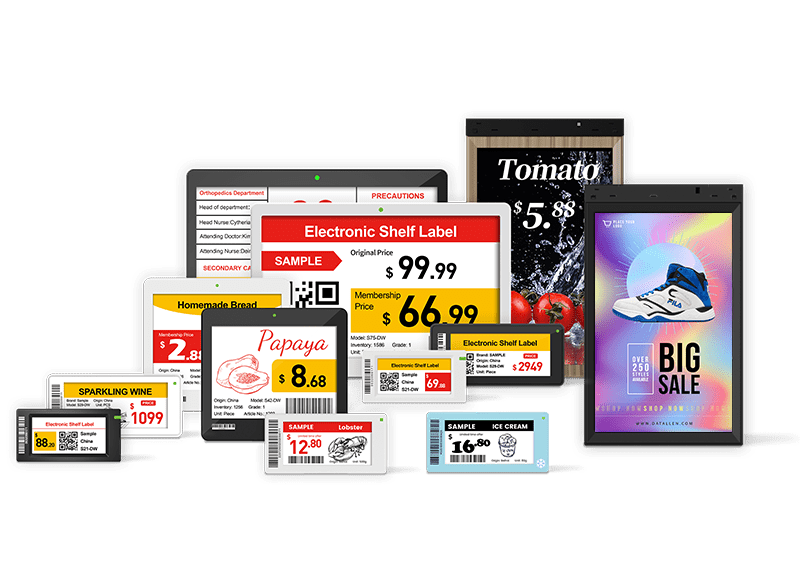
Electronic shelf labels (ESLs) change how retailers handle this work. Instead of manually replacing paper tags, retailers can update prices digitally through a centralized system.
However, faster price updates alone do not establish a strong business case. The more important question is whether the savings and operational improvements justify the initial investment.
Understanding electronic shelf labels ROI requires looking beyond the price of individual labels. Retailers need to compare the full cost of paper-based price management with the total cost of an ESL system, including installation, software, integration, and ongoing operation.
This guide uses real supermarket examples and a practical cost model to explain how to calculate ESL ROI, estimate the payback period, and identify the conditions under which electronic shelf labels make financial sense.
Electronic Shelf Labels Cost: What Goes Into the Investment?
The electronic shelf labels cost is not simply the price of each display. A complete deployment involves several components, and the final budget depends on store size, label quantity, product requirements, infrastructure, and integration complexity.
Initial investment
Cost component | What it covers |
ESL hardware | Electronic labels in different sizes and display formats |
Communication infrastructure | Base stations or gateways that connect labels to the management system |
Rails and accessories | Shelf rails, clips, brackets, and other mounting components |
Software and system setup | ESL management platform, configuration, and deployment preparation |
POS/ERP integration | Connecting product, price, and inventory data with existing retail systems |
Installation and testing | Label installation, network checks, synchronization, and operational testing |
Staff training | Training employees to manage price updates and routine exceptions |
The electronic shelf label price varies by display size, functionality, order quantity, and supplier pricing structure. A smaller label used for standard shelf pricing will generally have a different cost from a larger display designed to show more product information.
Retailers should therefore request a project-level quotation rather than estimate the investment using a single per-label figure.
Ongoing costs
An ESL system may also involve recurring expenses, but the software charging model varies considerably between manufacturers.
Some providers charge annual software subscription or licensing fees that can reach several thousand or even tens of thousands of US dollars, depending on the number of labels, stores, software functions, and service package. Other manufacturers, including Datallen under its standard offering, generally provide ESL management software without an additional software fee.
This difference can have a meaningful impact on the total cost of ownership (TCO) and long-term electronic shelf labels ROI. Retailers should confirm whether software licensing, cloud services, technical support, and future upgrades are included in the quotation or charged separately.
Other potential ongoing expenses include:
· Technical support and system maintenance
· Replacement labels and accessories
· Battery replacement when required
· Network and infrastructure maintenance
Comparing the initial ESL purchase price with only the annual paper and ink budget would produce an incomplete ROI assessment. Software fees and other recurring expenses should be evaluated according to the specific supplier's commercial model.
Electronic Shelf Labels vs Paper Price Tags Cost: A Practical Supermarket Model
To understand the financial difference, consider a hypothetical supermarket with 10,000 active SKUs.
The model below compares the annual cost of maintaining paper price tags with the recurring operating cost of an ESL system. It also estimates the initial investment required for electronic labels.
Important: The figures are illustrative assumptions, not a supplier quotation or the financial results of an actual supermarket. Actual costs will vary by country, labor rates, supplier pricing, store layout, and system requirements.
Store operating assumptions
Parameter | Assumption |
Active SKUs | 10,000 |
Price updates per week | 2,000 |
Annual price updates | 104,000 |
Average time per paper tag change | 1.5 minutes |
Employee hourly cost | $20 |
Paper, ink, and printing consumables per tag | $0.08 |
Annual printer maintenance | $600 |
ESL quantity | 10,000 labels |
The model assumes that 20% of the store's active SKUs require a price change each week. Each paper tag replacement takes an average of 1.5 minutes, including printing, sorting, locating the product, replacing the tag, and checking the result.
This represents approximately 50 employee hours per week:
2,000 updates × 1.5 minutes ÷ 60 = 50 hours
A. Annual cost of paper price tags
Cost item | Calculation | Annual cost |
Employee labor | 50 hours × 52 weeks × $20 | $52,000 |
Paper, ink, and printing consumables | 104,000 tags × $0.08 | $8,320 |
Printer maintenance | Estimated annual expense | $600 |
Total annual paper-tag management cost | $60,920 |
This calculation covers recurring price-tag replacement activities. It does not include every possible cost, such as price discrepancies, customer complaints, or lost sales caused by outdated shelf information.
B. Estimated initial ESL investment
For the same 10,000-SKU supermarket, assume the following project budget:
Investment item | Calculation | Estimated cost |
ESL labels | 10,000 × $8 | $80,000 |
Gateways/base stations | 10 × $350 | $3,500 |
Rails and mounting accessories | 10,000 × $0.80 | $8,000 |
Software configuration and integration | Project estimate | $7,500 |
Installation, testing, and training | Project estimate | $5,000 |
Total initial investment | $104,000 |
The unit prices above are assumptions for demonstrating the calculation. They should not be treated as standard market prices. Actual quotations may differ significantly depending on label specifications, infrastructure design, and integration scope.
C. Annual ESL operating costs
After installation, the supermarket still needs some employee time for exception handling, system checks, and routine administration. The model assumes two hours of employee time per week.
For this example, the supermarket uses an ESL solution with no additional annual software fee under the supplier's ordinary offering.
Cost item | Calculation | Annual cost |
Remaining employee labor | 2 hours × 52 weeks × $20 | $2,080 |
Software subscription | No additional annual fee in this example | $0 |
Replacement-label reserve | 1% of labels × $8 | $800 |
Total annual ESL operating cost | $2,880 |
A retailer choosing a supplier with annual software subscription fees would need to add those fees to this table. For example, a $5,000 annual software subscription would increase the estimated annual ESL operating cost to $7,880.
D. Annual cost comparison
Cost category | Paper price tags | Electronic shelf labels |
Employee labor | $52,000 | $2,080 |
Printing consumables | $8,320 | $0 |
Printer maintenance | $600 | $0 |
Software and support | $0 | $0 |
Replacement-label reserve | $0 | $800 |
Total annual operating cost | $60,920 | $2,880 |
Under these assumptions, the annual operating-cost difference is:
$60,920 − $2,880 = $58,040
This represents the estimated annual value of reduced labor requirements and eliminated paper-based expenses, before considering how much of the released employee time can actually be converted into cash savings.
An important distinction: Labor capacity vs. cash savings
The $58,040 difference should not automatically be treated as money saved in the supermarket's bank account.
If employees remain on the same payroll, reducing 48 hours of weekly price-tag work mainly creates additional labor capacity. The financial benefit becomes more direct when the supermarket can reduce overtime or temporary staffing, avoid hiring additional employees, or reallocate existing staff to productive tasks.
For a more conservative cash-based estimate, assume that only 60% of the labor savings can be converted into actual financial savings.
· Annual labor savings: $49,920
· Cash-convertible portion of labor savings: $29,952
· Printing and printer expenses avoided: $8,920
· Annual ESL replacement costs: $800
Estimated annual net cash savings:
$29,952 + $8,920 − $800 = $38,072
This distinction makes the calculation more realistic. It also explains why two supermarkets with similar SKU counts can achieve very different financial returns from the same technology.
Real Supermarket Examples: Why ESL Payback Periods Differ
A financial model is useful, but actual retail cases show how operating conditions influence the results.
Naifeh's Cash Saver: High-frequency price changes
At Naifeh's Cash Saver in Tennessee, the supermarket had been making as many as 2,000 price changes per week. Its owner reported spending approximately 50 employee hours per week changing paper shelf tags.
After adopting digital shelf labels, the same volume of price updates could be completed in approximately three minutes by downloading a file and sending the updates electronically. The owner expected the investment to be recovered in less than two years.
The case illustrates the potential value of ESLs in supermarkets with frequent price changes and substantial manual workload.
Source: U.S. Chamber of Commerce – Digital Shelf Labels in Retail.
Maurer's Market IGA: A 20,000-SKU investment
Maurer's Market IGA had approximately 20,000 SKUs and invested around $208,000 in electronic shelf labels.
The owner estimated a payback period of 1.5–2.5 years. According to the Independent Grocers Alliance, approximately half of the expected ROI was associated with reduced labor and paper-related expenses, while dynamic pricing opportunities were also expected to contribute to the return.
By comparison, Houchens Food Group estimated a payback period of approximately 3.5 years based on paper-tag expenses, labor, and ESL costs.
Terrebonne Thriftway: Labor savings do not always mean fast payback
A different example comes from Terrebonne Thriftway, a 10,000-square-foot independent supermarket in Oregon.
The retailer invested $124,000 in ESLs in 2008 and estimated that the system saved approximately 20–24 employee hours per week, in addition to reducing spending on paper, plastic, clips, and ink.
However, the owner estimated that labor savings alone would require around six to seven years to recover the investment.
Source: Supermarket News – Electronic Labels Cut Labor Costs for Independent.
These cases demonstrate why electronic shelf labels ROI should not be judged by the number of labels installed alone. Price-change frequency, labor costs, staffing arrangements, and the ability to use the system for additional retail operations all affect the final result.
How to Calculate the Cost Savings of Electronic Shelf Labels
The practical model above can be adapted to a retailer's own operating data.
Start by calculating the current annual cost of paper price-tag management:
Annual Paper-Tag Cost = Labor Cost + Printing and Material Costs + Printer Maintenance
Then calculate the annual ESL operating cost:
Annual ESL Operating Cost = Remaining Labor Cost + Software and Support + Maintenance and Replacement Costs
The difference provides an estimate of the annual operating benefit:
Annual Operating Benefit = Annual Paper-Tag Cost − Annual ESL Operating Cost
For a more accurate financial assessment, separate labor productivity from cash savings. Only include the portion of labor savings that can be financially realized in the cash-based ROI calculation.
Retailers should also avoid counting the same benefit twice. For example, if reduced price-tag labor has already been included in the labor savings calculation, it should not be added again as a separate productivity benefit.
How to Calculate ESL ROI and the Payback Period
Once the initial investment and annual net savings are established, retailers can estimate the return.
ESL ROI formula
ROI (%) = (Total Financial Benefits − Total Costs) ÷ Initial Investment × 100
For a simple annual payback calculation:
Payback Period = Initial Investment ÷ Annual Net Cash Savings
Using the hypothetical supermarket:
· Initial ESL investment: $104,000
· Annual net cash savings: $38,072
Payback period:
$104,000 ÷ $38,072 = approximately 2.7 years
If the supermarket can convert all of the released labor capacity into actual cost reductions, the annual operating benefit would be $58,040, resulting in a shorter estimated payback period:
$104,000 ÷ $58,040 = approximately 1.8 years
The difference between these two results shows why labor assumptions matter so much when calculating electronic shelf labels ROI.
For a complete investment evaluation, retailers should also consider the system's expected service life, financing costs, tax treatment, and the time value of money. A discounted cash-flow model or net present value (NPV) calculation is more suitable for a detailed capital investment decision than a simple payback formula.
Beyond Labor Savings: The Wider Business Benefits of ESLs
The financial value of electronic shelf labels is not limited to reducing the cost of changing prices.
Better pricing decisions and dynamic pricing in retail
With paper labels, frequent price adjustments can be time-consuming. This may discourage retailers from making smaller or more frequent changes, even when market conditions or inventory levels justify them.
ESLs make it easier to synchronize shelf prices with approved pricing decisions. This supports dynamic pricing in retail, including promotional updates, markdowns, and price adjustments based on product availability.
A study published in Management Science examined ESL adoption at an international grocery retailer. The researchers found that ESL installation increased gross margins, with the improvement associated with changes in sales quantities and unit prices. The effect was particularly evident in product categories with shorter shelf lives.
This research suggests that the benefits of electronic shelf labels can extend beyond labor savings. However, the results come from a specific retailer and should not be treated as a guaranteed outcome for every supermarket.
More efficient markdowns for perishable products
Fresh food, bakery items, dairy products, and other short-shelf-life goods often require timely markdowns to encourage sales before products expire.
When paper price changes take too long, employees may postpone markdowns or apply them less frequently. With ESLs, approved price reductions can be distributed to relevant shelf labels more efficiently.
This can help supermarkets respond to inventory conditions and reduce avoidable waste. The actual financial impact depends on product margins, markdown policies, demand patterns, and how effectively the retailer manages stock.
Improved price accuracy and store operations
When shelf prices and POS data are synchronized, retailers can reduce the risk of outdated shelf information and price discrepancies.
ESL systems can also support product identification, promotional communication, and selected picking or replenishment workflows, depending on the platform's capabilities.
These benefits may improve operational consistency across departments, particularly in supermarkets managing large product assortments.
What Factors Affect the ROI of Electronic Shelf Labels?
Before investing, supermarkets should evaluate several factors rather than relying on SKU count alone.
1. Price-change frequency
A store that updates hundreds or thousands of prices each week has more opportunities to reduce manual work than a store with relatively stable pricing.
2. Labor costs and staffing arrangements
Higher labor costs can increase the value of automation. However, the financial return depends on whether released employee time leads to actual cost reductions or more productive work.
3. Store size and label quantity
A larger deployment generally requires more labels and infrastructure. But the cost per label and the overall return may change with project scale and purchasing volume.
4. Product categories and shelf-life requirements
Fresh food and other short-shelf-life categories may benefit from faster markdown execution and more responsive pricing decisions.
5. System integration
Compatibility with existing POS, ERP, inventory, and pricing systems affects both deployment cost and long-term operational efficiency.
6. Ongoing operating expenses
Software fees, technical support, maintenance, and replacement requirements should be included in the financial model.
7. Employee adoption and deployment planning
A well-designed implementation plan helps reduce installation disruption and ensures employees can use the system effectively.
For supermarkets evaluating electronic shelf labels for supermarkets, these factors provide a more reliable basis for investment decisions than comparing label prices alone.
Choosing an ESL Solution for Supermarket Operations
A suitable ESL solution should match the supermarket's product categories, shelf layouts, operating environment, and existing retail systems.
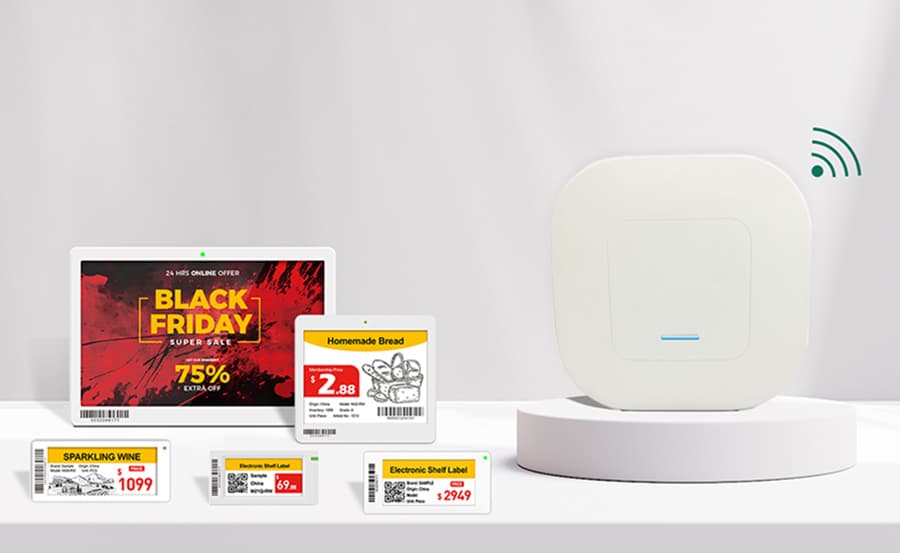
Datallen offers electronic shelf labels in multiple display sizes, including 2.13-inch, 2.66-inch, 2.9-inch, 4.2-inch, and 7.5-inch models.
Different models can be selected for different shelf applications. Maple Series labels are designed for standard room-temperature retail environments, while Cedar Series models support more demanding applications, including freezer environments down to -20°C.
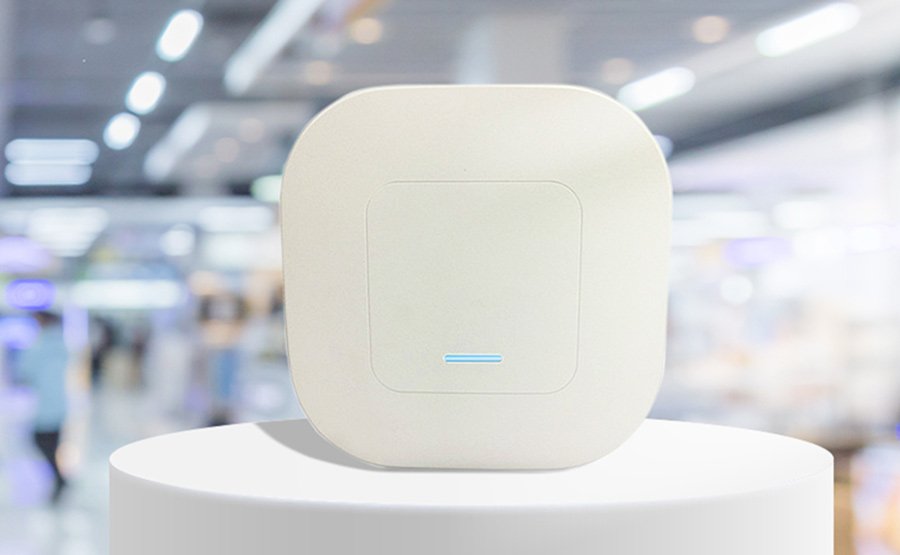
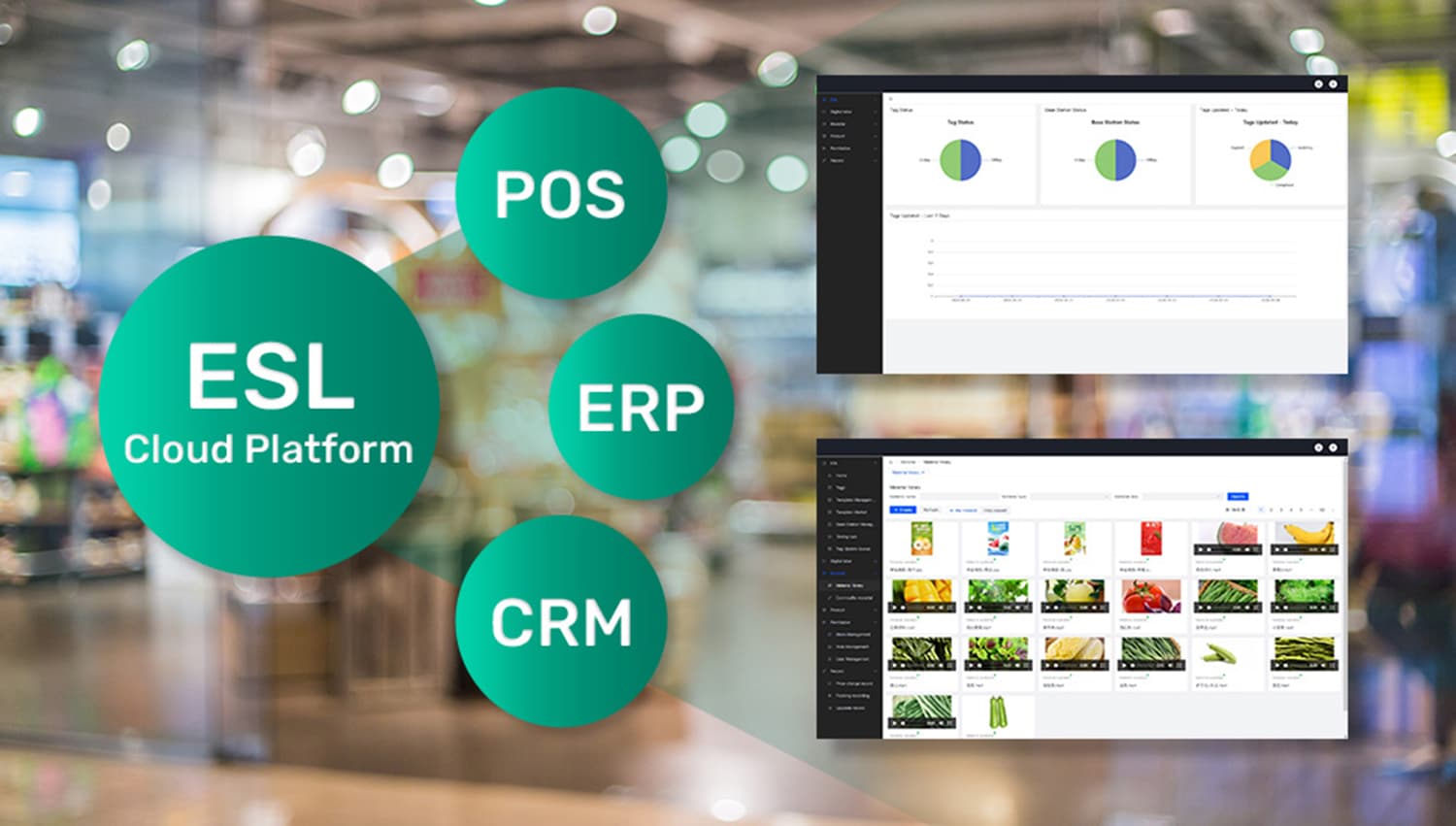
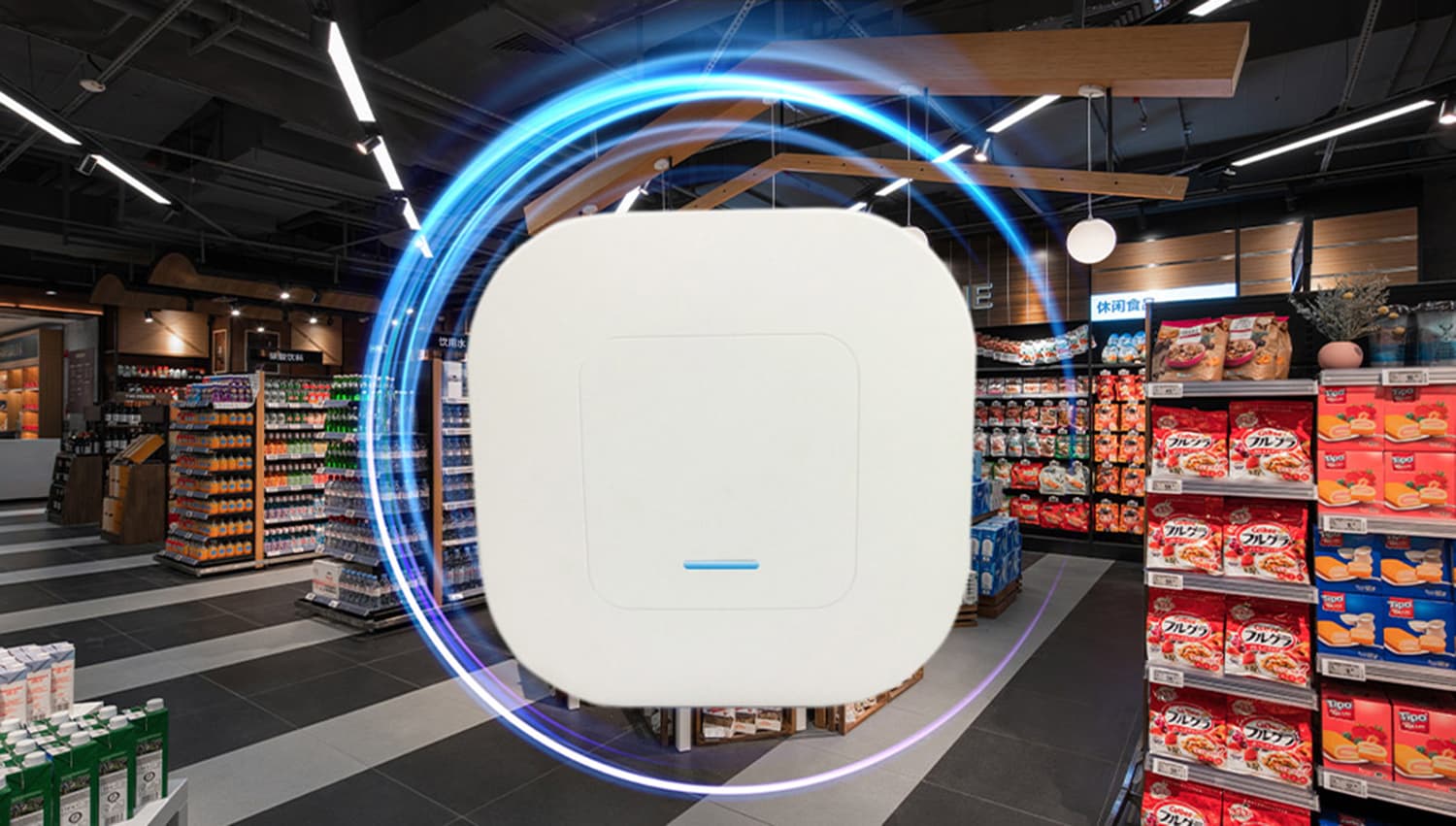
A single Datallen base station can support connections to up to 4,000 electronic shelf labels. The Datallen ESL system also supports integration with POS, ERP, CRM, and other retail systems, helping retailers synchronize product and pricing information across their operations.
For supermarkets planning an ESL deployment, the key is to select a system that fits the store's actual operating requirements, rather than simply choosing the lowest electronic shelf label price.
Learn more about Datallen Electronic Shelf Labels.
Frequently Asked Questions
What is the ROI of electronic shelf labels?
The ROI depends on the initial investment, labor and material savings, recurring system costs, and additional operational benefits. Supermarkets with frequent price changes and high manual labor requirements may achieve a faster return than stores with relatively stable pricing.
How long does it take for electronic shelf labels to pay for themselves?
There is no universal payback period. Published supermarket examples range from under two years to approximately 3.5 years, while one independent retailer estimated six to seven years based on labor savings alone. Store-specific costs and operating conditions determine the actual result.
How do electronic shelf labels save money?
ESLs can reduce manual price-tag replacement, printing materials, and printer-related expenses. They can also make promotional updates and markdown execution more efficient. Additional financial benefits depend on how the retailer uses the released labor capacity and system capabilities.
Are electronic shelf labels more cost-effective than paper price tags?
Paper tags generally require less initial investment, but they involve recurring printing, material, and labor expenses. ESLs require a higher upfront investment and ongoing system costs, but may become more cost-effective over time when a supermarket has frequent price updates and substantial manual workload.
How to calculate the cost savings of electronic shelf labels?
Compare the annual cost of paper-tag labor, printing materials, and printer maintenance with the annual ESL operating cost, including software, support, replacement labels, and remaining labor. Then distinguish actual cash savings from employee time that has simply been released for other tasks.
What factors affect the ROI of electronic shelf labels?
The main factors include price-change frequency, labor costs, SKU quantity, store size, product categories, integration requirements, installation costs, and recurring system expenses.
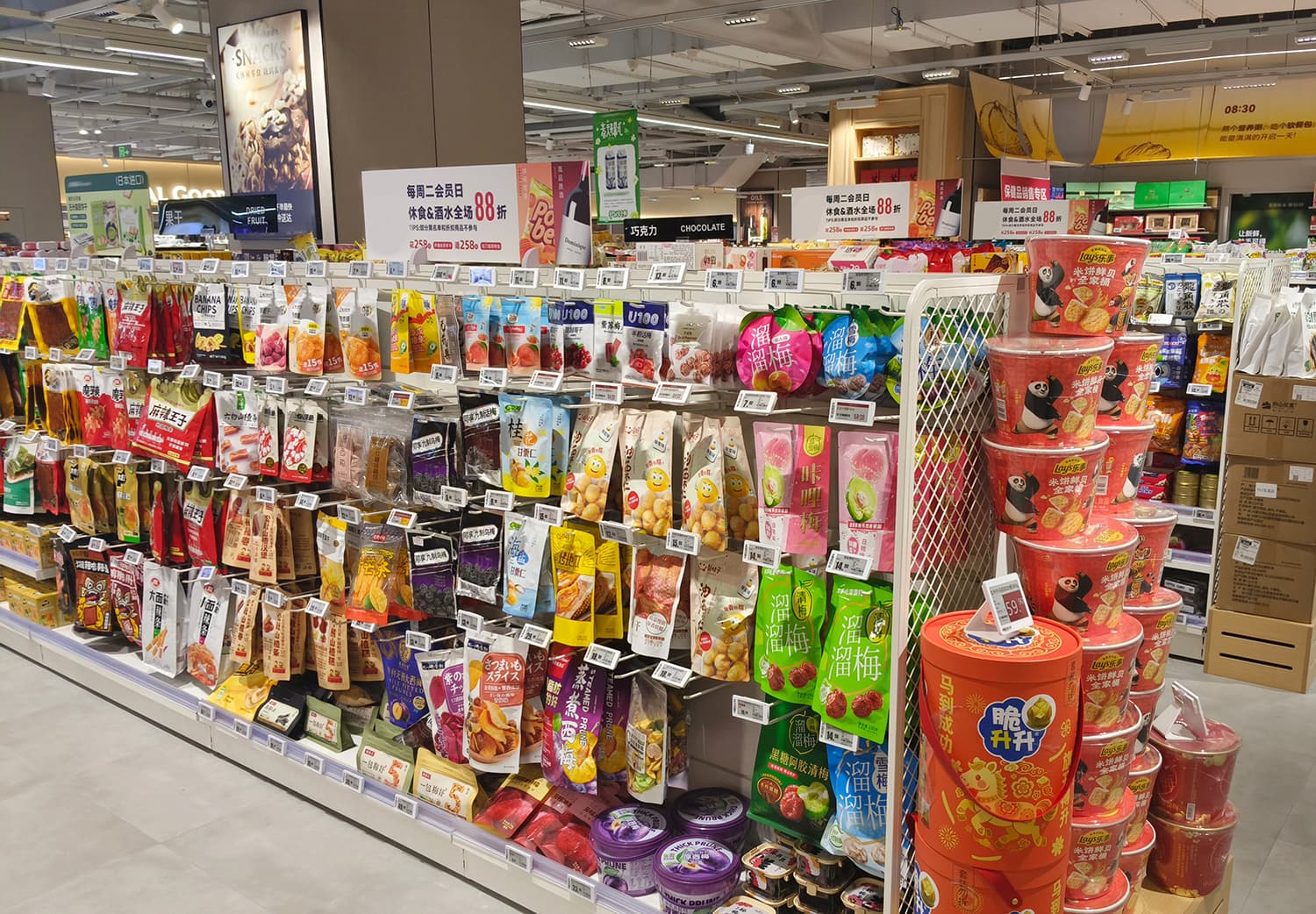
Electronic shelf labels are a long-term retail investment, not simply a replacement for paper price tags.
The strongest business case comes from understanding the store's existing price-management costs, identifying which savings can be financially realized, and evaluating the wider operational opportunities.
For supermarkets with frequent price changes, large product assortments, and demanding pricing workflows, a well-planned ESL deployment can improve cost control and day-to-day efficiency. The right ROI calculation starts with the store's own numbers.