Walking into a furniture showroom today is a very different experience from what it was a decade ago. Customers arrive armed with inspiration from Instagram, Pinterest, and brand websites. They have already seen thousands of product images before they ever step foot in a store. Yet once they are inside the showroom, they often encounter the same static printed signs, outdated price tags, and limited product information that have been the industry standard for generations.
This disconnect between the digital expectations of modern shoppers and the physical reality of many furniture showrooms represents both a challenge and a massive opportunity. For furniture retailers willing to embrace change, digital signage solutions offer a powerful way to bridge this gap — transforming static showroom spaces into dynamic, engaging environments that drive sales and build brand loyalty.
The Hidden Challenges Facing Today's Furniture Showrooms
Before exploring how digital signage solutions can help, it is worth understanding the specific pain points that furniture retailers face. These challenges are unique to the category and require tailored solutions.
Outdated Pricing and Promotion Communication
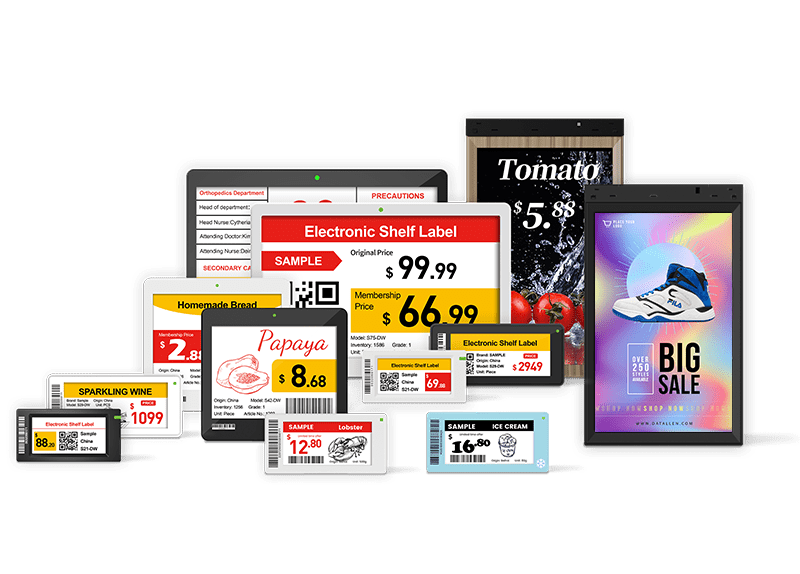
Furniture retail is a fast-moving business. Seasonal promotions change, inventory levels fluctuate, and pricing strategies evolve. Yet many showrooms still rely on printed paper tags and static signs that take days or weeks to update. By the time a new promotion is printed and distributed, it may already be outdated. This creates confusion for customers and missed revenue opportunities for retailers.
As one furniture retail case study revealed, stores with over 1,000 locations were struggling with printed signs that didn't arrive on time, inconsistent pricing updates between regions, and outdated promotions still displayed next to sold-out products. These are not isolated issues — they are systemic problems that erode customer trust and operational efficiency.
Limited Space for Product Storytelling
A sofa is more than just a sofa. It has a story — the materials it is made from, the craftsmanship behind it, the design philosophy it embodies, the lifestyle it represents. But a printed tag can only hold so much information. Even the most detailed paper label cannot convey the full narrative that helps a customer fall in love with a piece of furniture.
This is particularly acute for luxury furniture stores, where the buying decision is as much emotional as it is practical. Customers in premium showrooms expect to understand the heritage, materials, and design thinking behind each piece. Static signage simply cannot deliver this level of storytelling.
Inconsistent Brand Experience Across Locations
For furniture retailers with multiple showroom locations, maintaining a consistent brand experience is a constant struggle. One store may have the latest promotional materials while another is still displaying last season's offers. Employee communications, product knowledge updates, and visual merchandising standards all vary from location to location. This inconsistency dilutes brand equity and confuses customers who may visit different stores expecting the same experience.
How Digital Signage Solutions Address These Showroom Pain Points
The right digital signage solutions address each of these challenges directly, offering furniture retailers a pathway to more efficient, engaging, and profitable showroom operations.
Real-Time Pricing and Promotion Updates
Perhaps the most immediate benefit of digital signage in a furniture showroom is the ability to update pricing and promotions instantly. With a cloud-based content management system, changes can be pushed to every screen in every location simultaneously. A Memorial Day promotion can go live at exactly the right moment across all stores. A price adjustment can be made in seconds rather than days. This agility is not just convenient — it is a competitive advantage in a category where timing often determines sales outcomes.
Dynamic Product Storytelling Beyond Physical Space
Digital displays allow furniture retailers to tell the full story of each product. High-definition video can showcase how a sofa is made. Rotating images can display all available fabric and finish options. Customer testimonials and designer commentary can build emotional connection. This is particularly valuable for luxury furniture stores, where the narrative behind a piece is often as important as the piece itself.
One luxury furniture brand celebrating its 50th anniversary installed a nine-panel video wall to showcase high-definition videos and branded content, creating a memorable customer experience that differentiated the showroom in a crowded retail environment. The result was extremely positive feedback from staff, customers, and even neighbouring concessions.
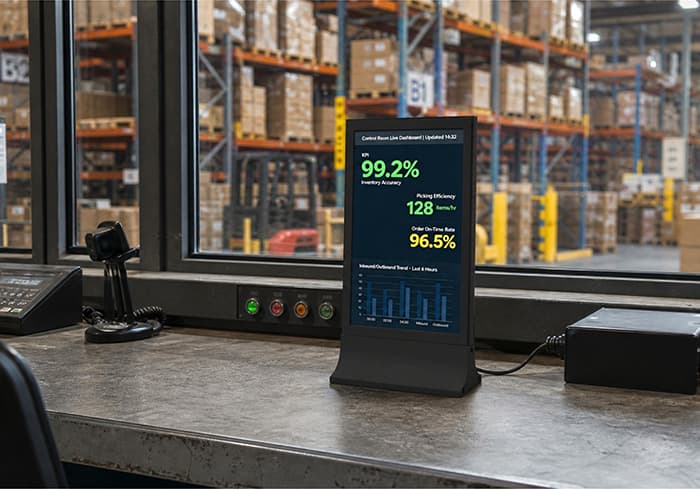
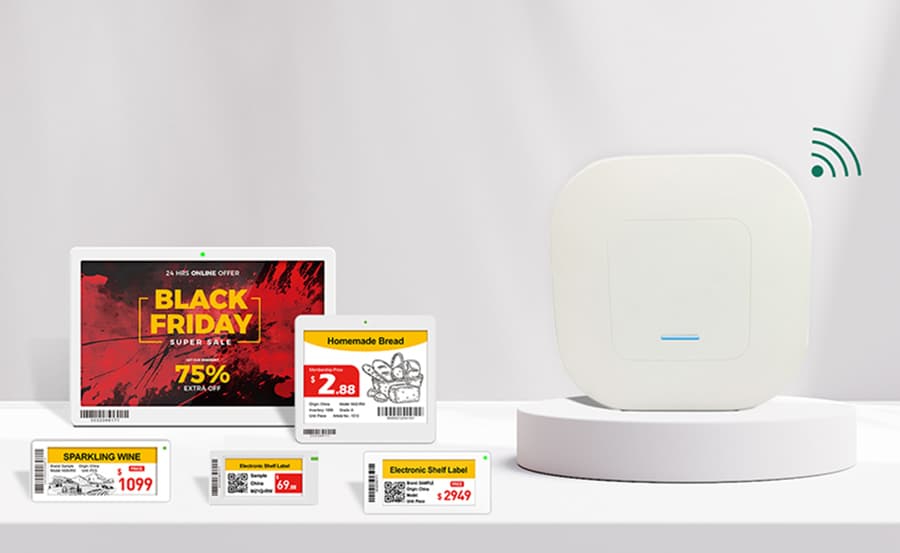
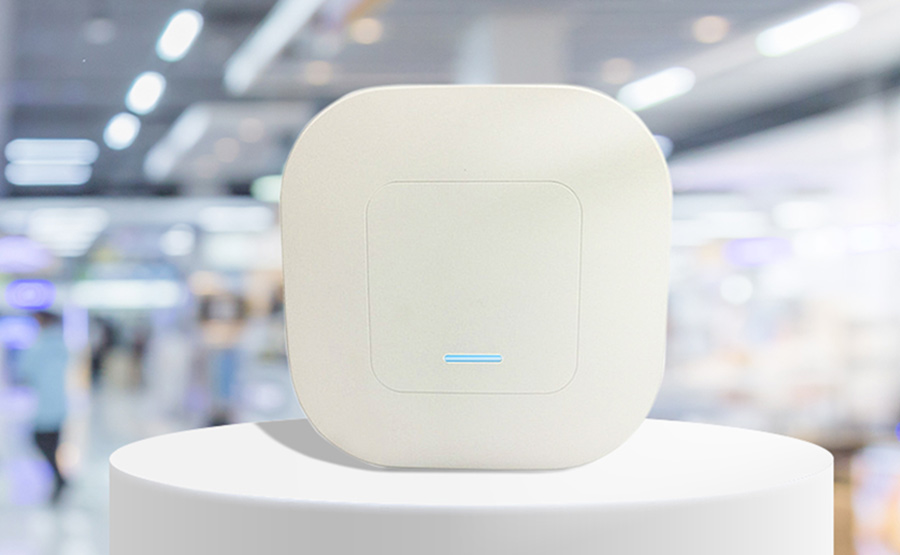
At Datallen, we understand that every furniture showroom has unique display needs. Our LCD digital signage products are designed with the flexibility to support a wide range of showroom applications — from standalone promotional displays to integrated video walls that capture attention and tell compelling brand stories. With cloud-based content management and Wi-Fi connectivity, Datallen's digital signage solutions enable furniture retailers to upload product details, videos, and images effortlessly, keeping showroom content fresh and relevant.
Centralized Content Management for Multi-Location Consistency
For furniture retailers operating multiple showrooms, centralized content management is transformative. A single marketing team can create content once and distribute it to every screen in every location. Employee communications, safety updates, and operational announcements can be broadcast instantly across the entire network. This consistency ensures that every customer, regardless of which showroom they visit, experiences the same brand message and quality standard.
Cloud-based digital signage CMS platforms have made this level of control accessible even to retailers without dedicated IT teams. Content can be created, previewed, and distributed to any internet-enabled screen from a central dashboard. This democratization of content management means that retail digital signage is no longer the preserve of large enterprises with deep technical resources.
Strategic Placement Across Your Showroom: Where Screens Deliver the Most Value
One of the most common mistakes furniture retailers make is treating every screen the same way. The reality is that different areas of a furniture showroom serve different customer needs — and the content displayed on each screen should reflect that. A screen is not just a piece of equipment; it is a communication channel. Strategic placement ensures that every display serves a distinct purpose in guiding customers from first impression to final decision.
Entrance and Welcome Area — The First Information Touchpoint
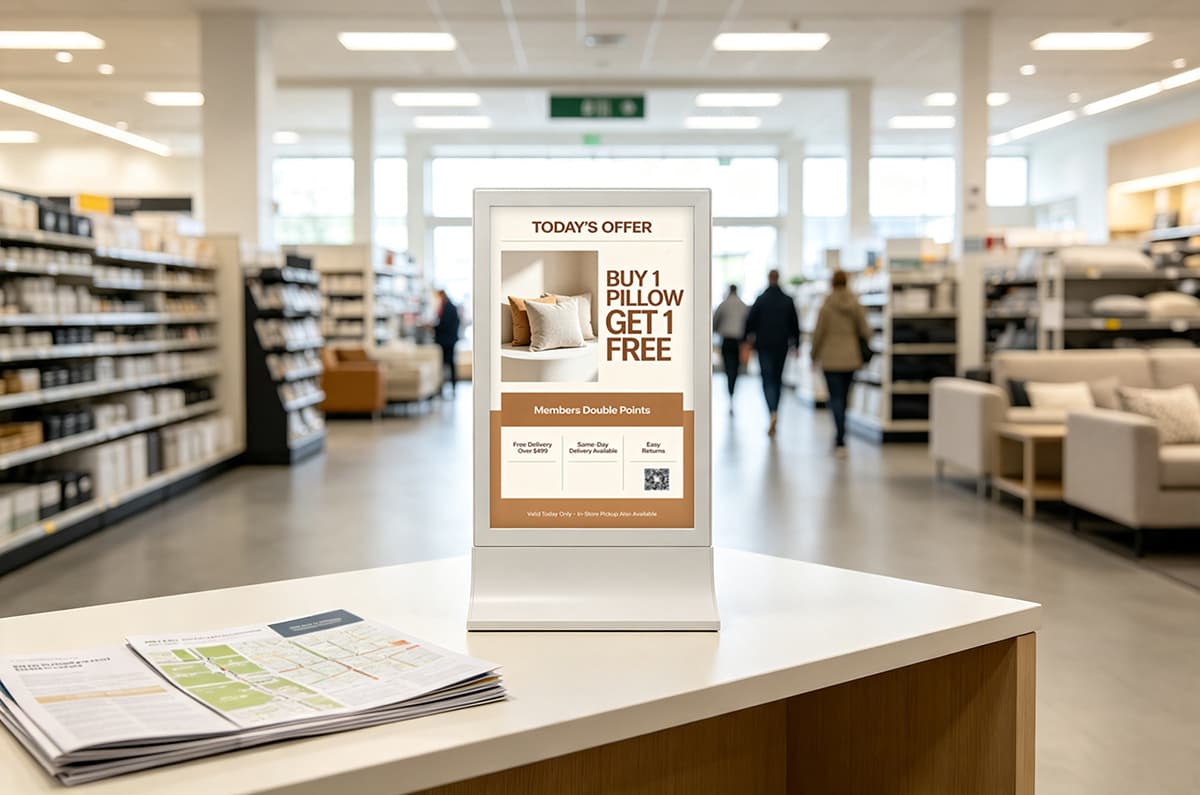
The moment a customer walks through the door is one of the most critical moments in their shopping journey. They are forming first impressions, orienting themselves to the space, and deciding whether to engage deeply or browse superficially. Digital signage at the entrance or service desk serves as the customer's first information touchpoint, setting the tone for everything that follows.
At this location, screens can display a showroom map that helps customers navigate large retail spaces — particularly valuable in multi-level furniture stores where wayfinding can be challenging.Today's special offers and limited-time promotions capture attention immediately, while QR codes invite customers to follow the brand on social media, access exclusive mobile content, or sign up for loyalty programs. Delivery and assembly policies, financing options, and return information can also be presented here, answering the practical questions that every customer has before they commit to a purchase.
Research shows that first impressions matter tremendously in retail. The entrance zone is where you welcome visitors, introduce your brand, and show what there is to discover in the showroom. A well-designed entrance display can stop customers from walking past and draw them into the shopping experience.
Aisle and Corridor Displays — Guiding Discovery
The aisles and corridors of a furniture showroom are the arteries through which customers flow. These transitional spaces are often underutilized in traditional retail design, yet they offer prime real estate for capturing attention during the "consideration zone" of the customer journey.
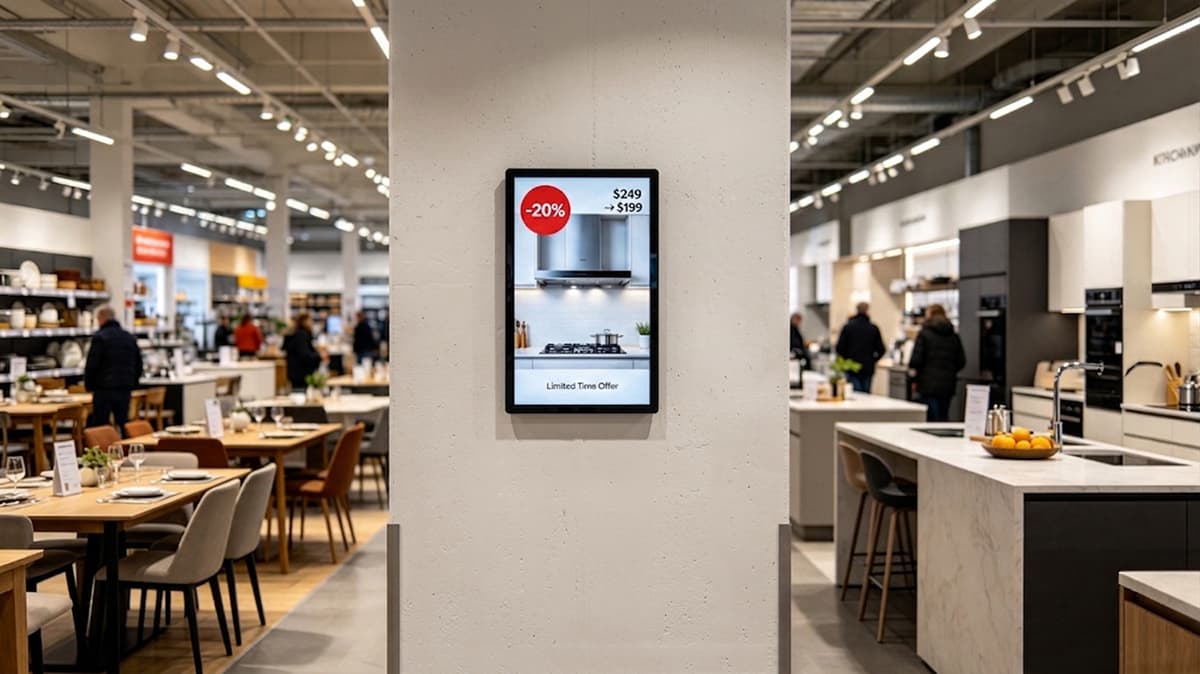
Mounting digital signage on walls along main aisles allows retailers to showcase featured products, new arrivals, and bestsellers in a way that static signage cannot match. High-definition video can bring furniture to life — showing how a sofa looks in a fully decorated living room, how a dining table accommodates a dinner party, or how a bedroom set transforms a space. These displays serve as discovery engines, introducing customers to products they might otherwise walk past.
For stores with a large footprint — which is common in furniture retail — digital screens placed at strategic intersections can guide customers toward specific departments or collections. A screen at the junction between living room and dining room sections might showcase coordinated collections that work across both spaces, encouraging cross-category consideration and larger basket sizes.
Product-Specific Display Areas — Detailed Information on Demand
In the product-specific areas of a furniture showroom — such as the bedroom section, the living room zone, or the dining area — customers are moving from discovery to evaluation. They have identified products of interest and are now seeking detailed information to support their decision.
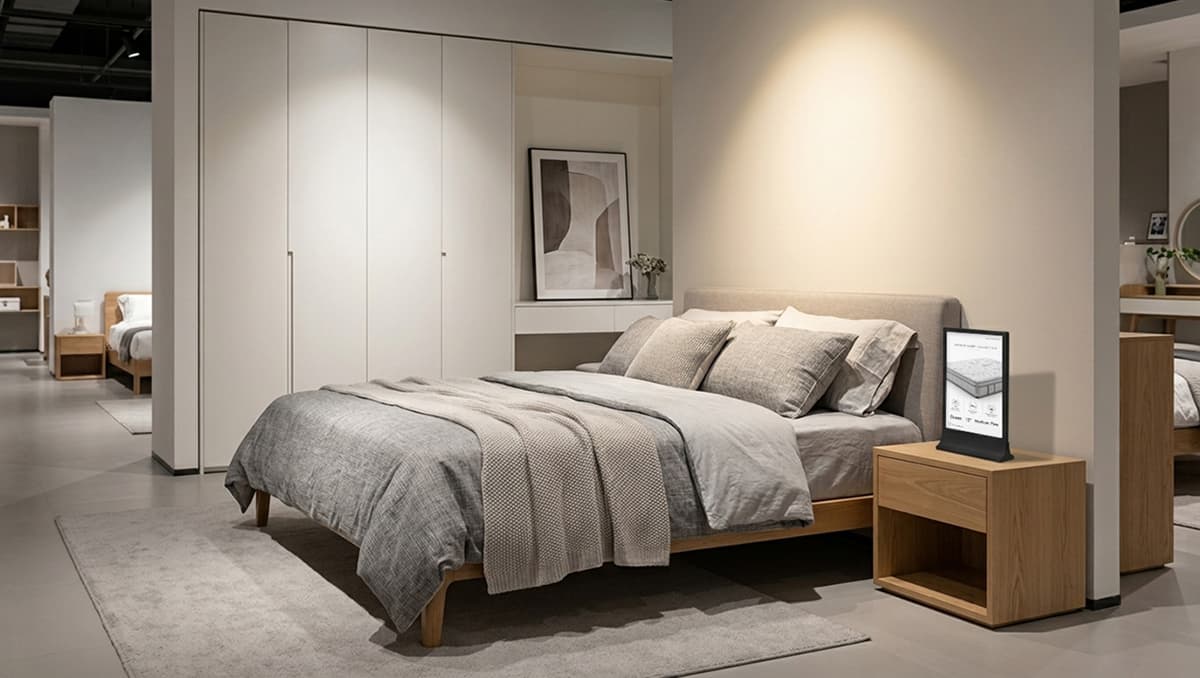
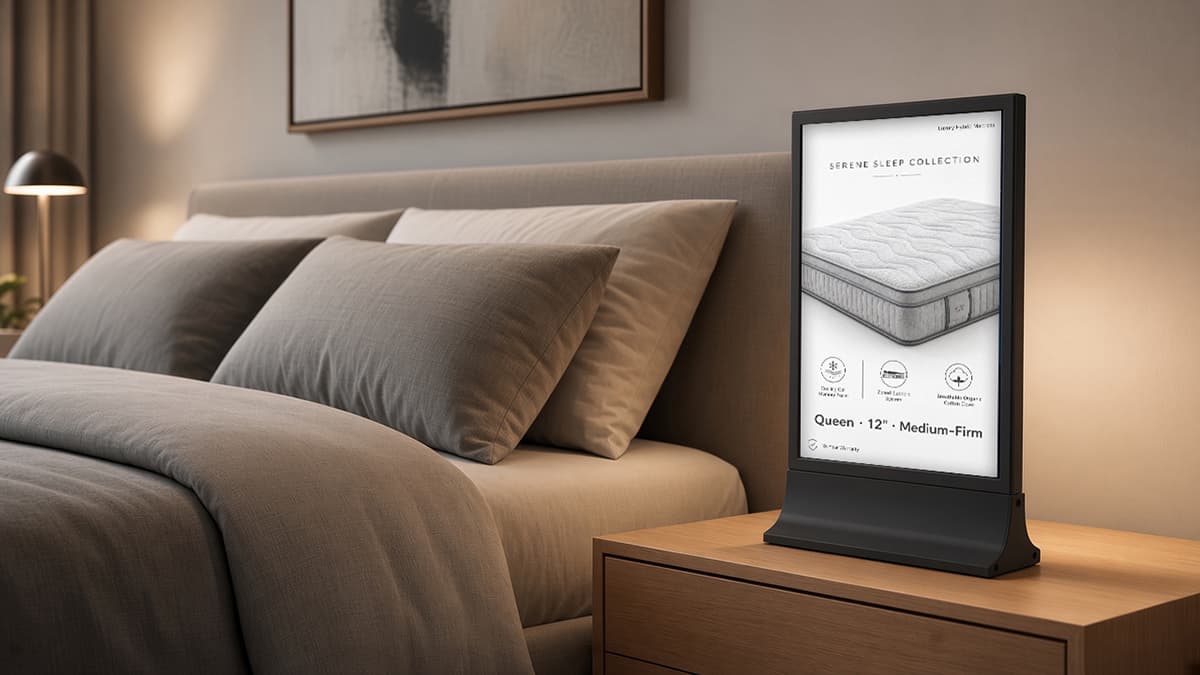
This is where digital signage excels at delivering the depth of information that printed tags cannot accommodate. Smaller screens placed near product vignettes can display comprehensive specifications: dimensions, available materials and finishes, color options, care instructions, and warranty details. For bedroom furniture, for instance, screens can show fabric swatches, mattress specifications, and storage capacity details that help customers compare options side by side. For sofas and seating, displays can illustrate the differences between leather grades, fabric weaves, and cushion fillings.
Beyond specifications, these screens can also show customer reviews and ratings, providing the social proof that modern shoppers increasingly rely on. Integration with inventory systems can display real-time availability — showing whether a particular color or size is in stock at this location or available for delivery.
Lifestyle and Inspiration Zones — Visualizing the Possibilities
Some of the most powerful applications of digital signage in furniture retail go beyond product information to inspire customers with design possibilities. In dedicated lifestyle or inspiration zones, large-format displays and video walls can showcase the full potential of a furniture collection.
Video walls can display moodboard-style content that pairs product images with aspirational imagery — showing how different furniture pieces work together in a cohesive design scheme. Rotating content can demonstrate the same furniture piece in multiple colorways and configurations, helping customers visualize how a sofa might look in navy velvet versus charcoal linen, or how a dining set adapts to formal and casual settings.
This type of content is particularly effective in the living room and dining room sections, where customers are making significant investments and need to feel confident that their choices will work in their own homes. By showing furniture in beautifully designed room settings — complete with complementary accessories, artwork, and lighting — digital displays help customers bridge the gap between seeing a product in a showroom and imagining it in their own space.
One home furnishings company with more than 40 showrooms across the U.S. and Canada transformed its designer experience by replacing printed materials with digital displays that showcased the full range of furniture offerings. The result was a more dynamic, product-forward environment that helped close the gap between customer interest and purchase decision.
Key Benefits of Digital Signage for Furniture Retailers
The business case for digital signage solutions in furniture showrooms is supported by compelling data from retail research and real-world deployments.
Measurable Sales Lift and ROI
Research published in the Journal of Marketing analyzed 237 separate digital signage campaigns and found that exposure to digital signage increases the purchase probability of featured products by 8.1% on average. The study also revealed that digital signage delivers an average gross return on investment of 21% for brand manufacturers. For furniture retailers, where average transaction values are high and purchase decisions are often made in-store, these numbers translate into significant revenue opportunities.
One home furnishings retailer reported a 9% lift in sales attributed to design services after implementing digital displays in their showrooms. The displays helped increase customer confidence in purchase decisions and build trust with designers — factors that directly contributed to closing more deals. Another furniture retailer with over 1,000 locations reported improved employee engagement, reduced manual communication overhead, and better alignment between office and production floor communications after deploying digital signage.
Enhanced Customer Engagement and Dwell Time
In furniture retail, time spent in the showroom correlates strongly with purchase likelihood. The longer a customer engages with products and explores possibilities, the more likely they are to make a purchase. Digital signage increases dwell time by making the showroom experience more informative and visually engaging.
Studies show that dynamic digital content attracts customer attention up to four times more effectively than static printed materials. Well-placed digital displays can increase sales by up to 30%, depending on the product category and implementation quality. For furniture retailers, where purchase cycles are longer and decision-making is more deliberate, this attention-capturing capability is particularly valuable.
Operational Efficiency and Reduced Print Costs
Beyond direct revenue impact, digital signage solutions deliver significant operational savings. The cost of printing, distributing, and installing paper signage across multiple showroom locations adds up quickly. Digital signage eliminates these recurring expenses entirely. Once the initial hardware investment is made, every subsequent content update is effectively free.
Research indicates that the ROI breakeven for most retail digital signage deployments is between 8 and 18 months. After that point, every additional content change costs nothing with digital signage, compared to ongoing printing and labor costs for static signage. For furniture retailers with high inventory turnover and frequent promotional cycles, these savings can be substantial.
FAQ — Common Questions About Digital Signage for Furniture Showrooms
Q: What is the typical cost of implementing digital signage in a furniture showroom?
A: Costs vary widely depending on the number of screens, display sizes, and software requirements. A basic single-screen deployment can start from a few tens of dollars, while multi-screen video wall installations run significantly higher. Most furniture retailers achieve ROI breakeven within 8 to 18 months. The total cost of ownership should factor in hardware, software licensing, content creation, and ongoing maintenance.
Q: Do I need technical expertise to operate digital signage in my showroom?
A: Modern cloud-based digital signage platforms are designed to be user-friendly. Marketing teams can create, schedule, and publish content without IT support. Most platforms offer drag-and-drop interfaces and pre-built templates that make content creation accessible to non-technical users. Basic training is typically sufficient for day-to-day operations.
Q: Can digital signage integrate with my existing inventory and POS systems?
A: Yes. Advanced digital signage platforms offer API integrations that connect with inventory management and POS systems. This enables real-time display of stock availability, automated price updates based on inventory levels, and triggered promotions when certain products are running low. These integrations maximize the operational value of digital signage investment.
Q: How do I measure the ROI of digital signage in my furniture showroom?
A: ROI can be measured through multiple channels: direct sales lift on promoted items (typically 15–30% for retail deployments), reduced print and labor costs, increased customer dwell time, and improved employee communication efficiency. Many retailers track performance by comparing sales of promoted products before and after digital signage implementation, or by running A/B tests with and without digital displays.
Q: Is digital signage suitable for small independent furniture stores, or only large chains?
A: Digital signage is scalable to any size operation. Small independent stores can benefit from single-screen deployments that showcase product videos, promotions, and brand content. Cloud-based platforms make it affordable and accessible for businesses of all sizes. The key is to match the deployment scale to the store's specific needs and budget.
Q: How often should I update the content on my showroom digital signage?
A: Content freshness is critical to maintaining customer engagement. At a minimum, promotional content should be updated with each seasonal campaign or sales event. Product information should be updated whenever specifications, pricing, or availability change. Many successful furniture retailers refresh their digital signage content weekly, with some updating daily during peak sales periods. The cloud-based nature of modern digital signage makes frequent updates quick and cost-effective.
Q: What type of content performs best on furniture showroom displays?
A: High-quality video content consistently outperforms static images in furniture retail. Lifestyle videos showing furniture in beautifully designed room settings generate the strongest emotional response. Product demonstration videos that highlight features like ease of assembly, material quality, or functional versatility also perform well. Customer testimonial videos and designer commentary add credibility and build trust. For best results, furniture retailers should invest in professional video production that reflects their brand quality.
Q: Can digital signage help with employee training and internal communications in a furniture showroom?
A: Absolutely. Many furniture retailers use their digital signage networks for both customer-facing and employee-facing communications. Screens in back-office areas or break rooms can display training videos, product knowledge updates, safety announcements, and sales performance metrics. This dual-purpose approach maximizes the return on investment by serving both customer engagement and operational efficiency goals.
The furniture retail landscape is evolving rapidly. Customers expect more than just products — they expect experiences, stories, and seamless access to information. From real-time pricing updates to immersive brand storytelling, the right digital signage strategy can transform how customers discover, connect with, and purchase furniture.
For furniture retailers ready to make the leap, the technology is mature, the ROI is proven, and the competitive advantage is waiting to be claimed.