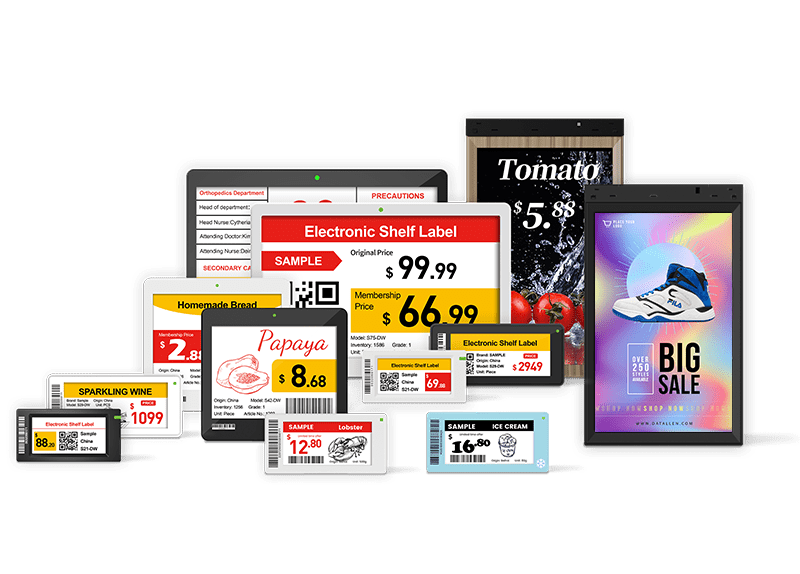
The term digital shelf is increasingly used in retail, but it can describe two closely related concepts. In e-commerce, it refers to the digital presentation of products across online channels, including search results, product pages, marketplaces, brand websites, and shopping apps. In physical retail, the concept extends to connected and data-driven shelves, commonly known as smart shelves, where technologies such as electronic shelf labels, RFID, sensors, computer vision, and IoT connectivity turn traditional shelves into sources of real-time operational data.
The distinction matters because consumers no longer separate online research from in-store shopping. Product information found online influences store visits, while product availability and pricing in physical stores influence whether customers complete a purchase. Inaccurate product content can contribute to product returns, while online marketplaces have become an important place for consumers to research unfamiliar products before buying.
Part 1: Understanding the Digital Shelf — The Virtual Shelf in Online Retail
What Is a Digital Shelf in E-Commerce?
In its online meaning, a digital shelf is the complete digital presentation of a product across the channels where consumers can discover, evaluate, and purchase it. It is not limited to a single product page. It includes search engine results, e-commerce marketplaces, retailer websites, brand websites, shopping applications, social commerce platforms, and other digital touchpoints.
The concept can be compared with a physical retail shelf. Search ranking is similar to shelf position: products that appear prominently are more likely to be noticed. Click-through rate is comparable to store traffic, while conversion rate reflects how effectively product presentation turns attention into purchases. Product availability, price, reviews, images, and descriptions all influence the consumer's decision in much the same way that shelf placement, packaging, pricing, and product availability influence an in-store purchase.
Why the Online Digital Shelf Matters in 2026
The online digital shelf is becoming more complex as consumers increasingly use AI-powered search and shopping tools. Instead of browsing a traditional list of search results, shoppers may ask an AI assistant to compare products, recommend alternatives, summarize reviews, or identify the best option for a particular need.
This creates greater pressure on retailers and brands to maintain structured, accurate, and consistent product data. AI systems need reliable information to understand products and make useful recommendations. As a result, data quality is becoming a competitive factor rather than simply an operational requirement.
Agentic AI is also beginning to influence the shopping journey. AI agents can potentially compare products, check availability, evaluate prices, and support purchasing decisions with less direct browsing. This makes the quality and consistency of product information increasingly important across every digital channel.
Part 2: The Physical Digital Shelf — Smart Shelves and In-Store Digitalization
While the online digital shelf is primarily about product discovery and presentation, the physical store introduces a different challenge: how can retailers obtain accurate, real-time information about what is actually happening at the shelf?
This is where smart shelves become important. A smart shelf is a traditional retail shelf enhanced with connected technologies that can capture information, display updated product data, communicate with retail systems, or trigger operational actions. Instead of functioning as a passive fixture, the shelf becomes part of the store's information network.
What Are Smart Shelves?
Smart shelves can combine several technologies depending on the retailer's objectives. There is no single hardware configuration that defines every smart shelf. A supermarket focused on pricing accuracy may prioritize electronic shelf labels, while a fashion retailer may place greater emphasis on RFID. A high-volume grocery operation may combine RFID, weight sensors, computer vision, and inventory software.
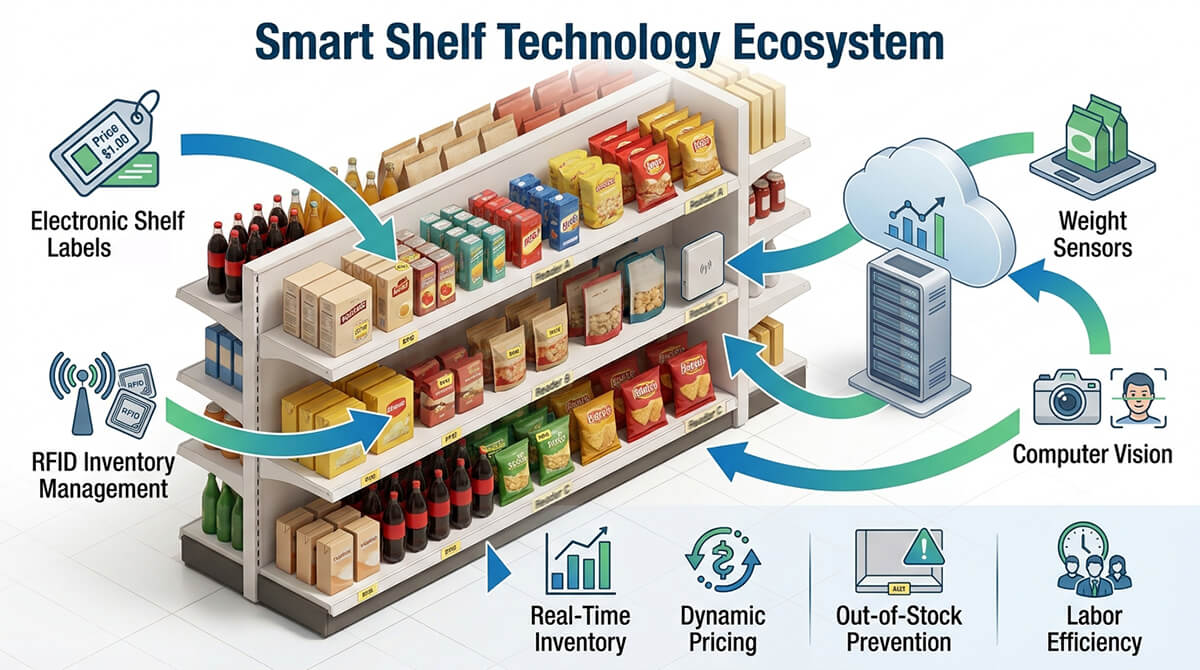
The most common technology components include:
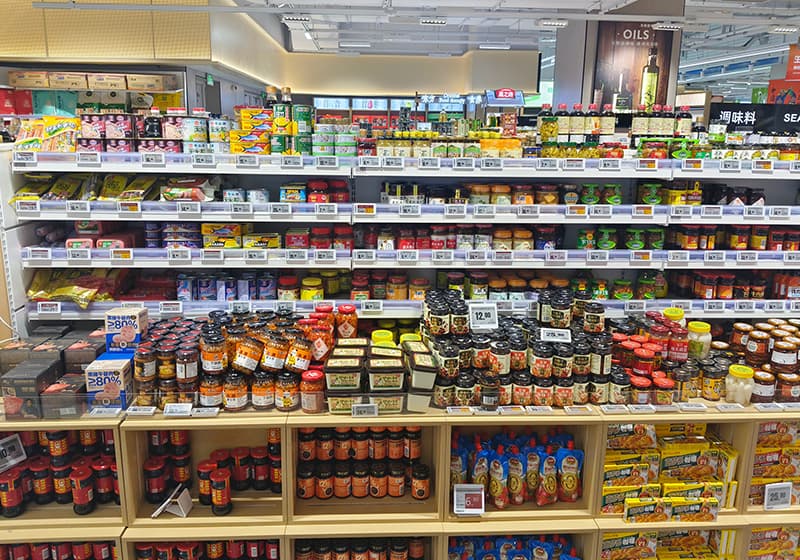
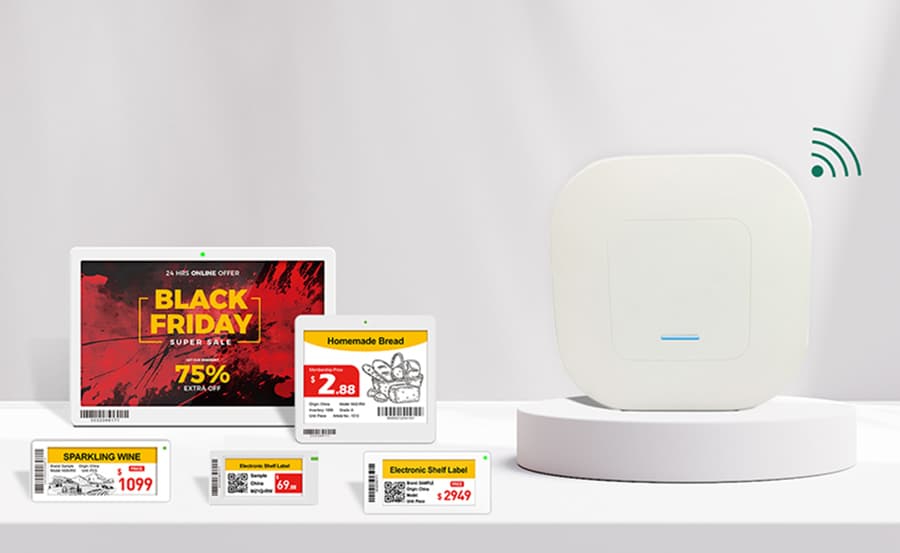
Electronic shelf labels (ESLs): Digital price tags that replace paper labels and allow prices and product information to be updated remotely.
RFID inventory management: RFID tags and readers provide item-level or category-level visibility and can support faster inventory checks and more accurate stock information.
Weight sensors: Sensors can monitor changes in product quantity on a shelf and identify potential replenishment requirements.
Computer vision: Cameras and AI-based image recognition can identify shelf conditions, product placement, gaps, and planogram compliance.
IoT and edge computing: Connected infrastructure enables shelf-level data to move between physical devices and retail software with low latency.
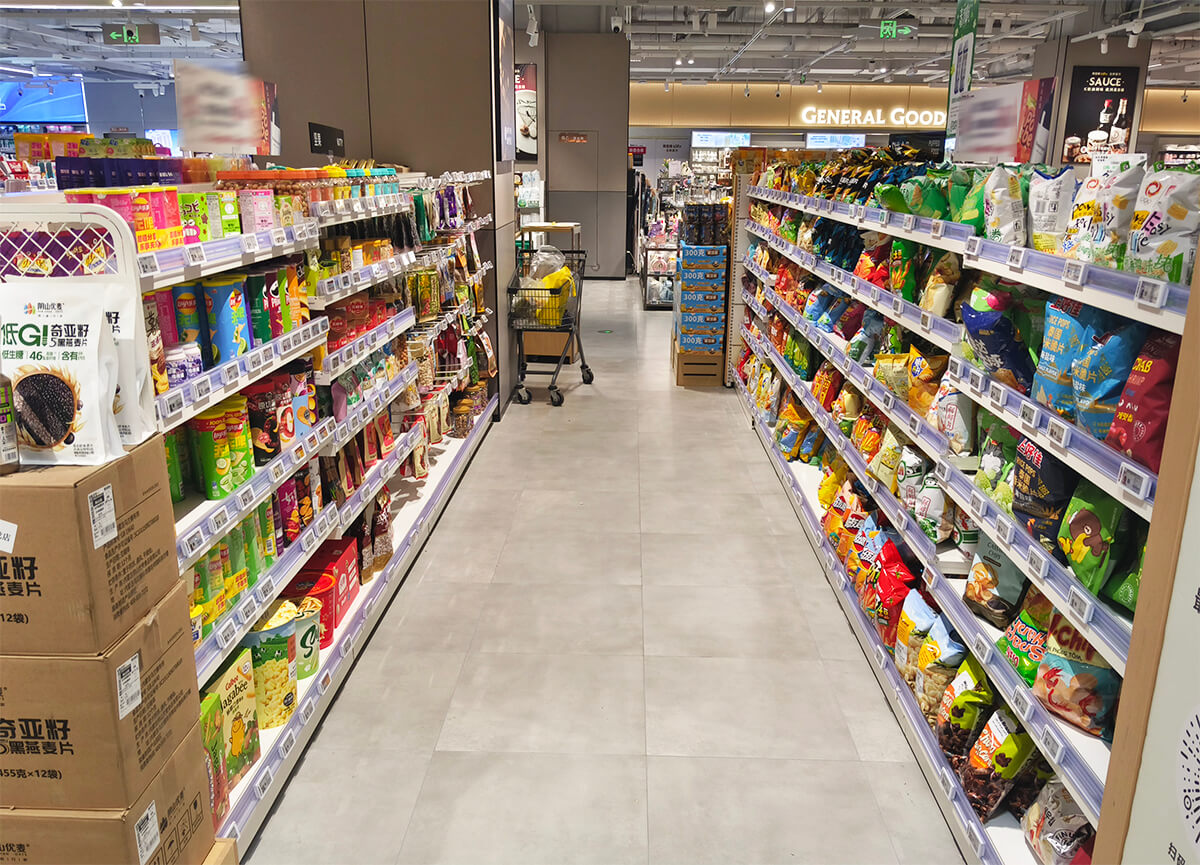
RFID Inventory Management: Turning Shelf Data into Inventory Visibility
RFID inventory management is one of the most important technologies in advanced smart shelf deployments. Traditional inventory processes often depend on periodic manual counting or transaction records. These approaches can create a gap between what the system says is available and what is physically present on the sales floor.
RFID can reduce this gap by identifying tagged products through radio-frequency communication. Depending on the implementation, retailers can use RFID readers to capture product movements, conduct faster stock counts, locate merchandise, and improve inventory accuracy without requiring employees to scan every item individually.
The value becomes even greater when RFID data is connected to inventory management, POS, ERP, or order fulfillment systems. A retailer can move from simply knowing how much inventory exists in a distribution center to understanding what is available at a particular store or even within a specific sales area.
However, RFID is not necessary for every smart shelf deployment. Retailers should select the sensing technology according to product characteristics, operational requirements, store environment, and return-on-investment expectations. ESLs, for example, can create immediate value in stores where pricing changes are frequent, even without a full RFID deployment.
How Smart Shelves Address Real Retail Problems
1. Improving Inventory Accuracy
Many inventory problems become visible at the shelf before they become visible in a warehouse report. A product may technically exist in store inventory but be misplaced, unavailable on the sales floor, or incorrectly recorded in the system. Smart shelf technologies provide additional shelf-level signals that help retailers identify these gaps.
When ESLs are integrated with POS and inventory systems, the shelf label is no longer simply a price display. It becomes part of a connected retail workflow. Pricing, product information, promotions, and operational data can be managed from centralized systems and distributed to thousands of shelf labels.
2. Preventing Out-of-Stock Situations
An empty shelf can mean a lost sale even when inventory is technically available somewhere in the store. Smart shelf systems can help identify shelf gaps through RFID, weight sensing, computer vision, or combinations of these technologies.
Once a potential stock-out is detected, the information can be sent to store associates or inventory systems. Instead of relying entirely on routine shelf checks, employees can prioritize replenishment tasks based on actual shelf conditions.
3. Reducing Manual Shelf Work
Price changes, promotional campaigns, and product information updates can require substantial manual work when stores rely on paper labels. Employees may need to print labels, locate the correct products, remove old labels, install new ones, and verify the results.
ESLs can significantly reduce this repetitive workload because price and product information can be updated remotely. The exact labor savings depend on store size, product count, update frequency, and existing processes, but the operational benefit becomes particularly noticeable in stores with frequent promotions or large numbers of SKUs.
4. Supporting Omnichannel Fulfillment
Accurate store-level inventory has become increasingly important as retailers expand click-and-collect, buy-online-pickup-in-store, ship-from-store, and rapid delivery services. Customers expect an item shown as available online to actually be available when they arrive at the store.
Smart shelves can contribute to this process by generating more reliable information about shelf conditions and product availability. The physical store therefore becomes part of the retailer's fulfillment network rather than operating as a separate sales channel.
5. Making Dynamic Pricing More Practical
Dynamic pricing is relatively easy to implement in software but historically more difficult to execute consistently in physical stores. A retailer may change a price in its central system, yet the paper label on the shelf remains unchanged until an employee replaces it.
ESLs help close this gap. When connected to a pricing platform or POS system, updated prices can be distributed to shelf labels without requiring employees to manually replace paper tags. This can shorten the time between a pricing decision and its physical execution from days or hours to minutes, depending on the system architecture.
6. Improving Promotion Execution
Promotional execution is another area where smart shelves can create measurable operational value. Promotions often involve multiple SKUs, different stores, specific start and end times, and multiple pricing rules. Centralized digital management can help retailers coordinate these changes more consistently.
The objective is not simply to replace paper labels with digital labels. The larger opportunity is to connect pricing, inventory, merchandising, and store operations so that changes made centrally can be reflected accurately at the shelf.
Market Growth and the Shift Toward Intelligent Stores
The smart shelves market reflects the growing demand for connected retail infrastructure. One 2026 market assessment estimates that the global market increased from approximately USD 4.77 billion in 2025 to USD 5.72 billion in 2026, with the market projected to reach approximately USD 17.76 billion by 2031.
Retail technology adoption is also moving beyond isolated pilot projects. Recent industry research indicates that approximately 97% of retailers have either deployed or plan to deploy store intelligence technology within the following year.
AI is an important part of this transition. Sensors, RFID readers, cameras, ESLs, and other connected devices generate large volumes of operational data. AI-driven analytics can then transform those raw signals into predictions and recommended actions, such as identifying likely stock-outs, detecting merchandising problems, optimizing replenishment, or improving promotion execution.
Digital Shelf Technologies from Datallen
For retailers building a connected shelf environment, the technology does not necessarily have to be deployed as one large system from the beginning. Datallen provides digital retail technologies including electronic shelf labels and digital signage that can be incorporated into different store digitalization strategies.
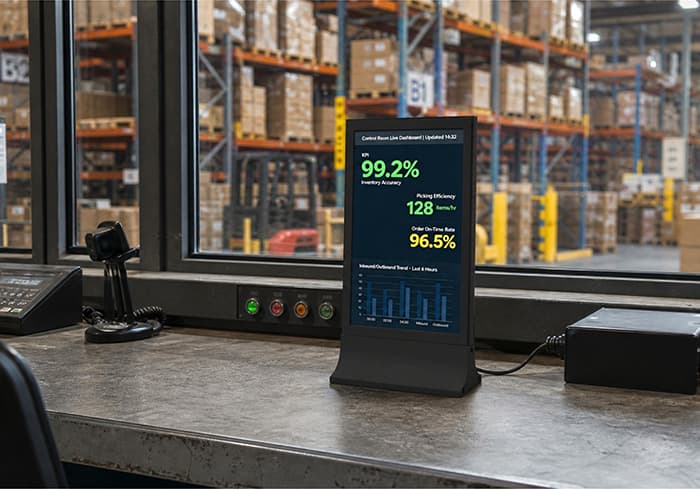
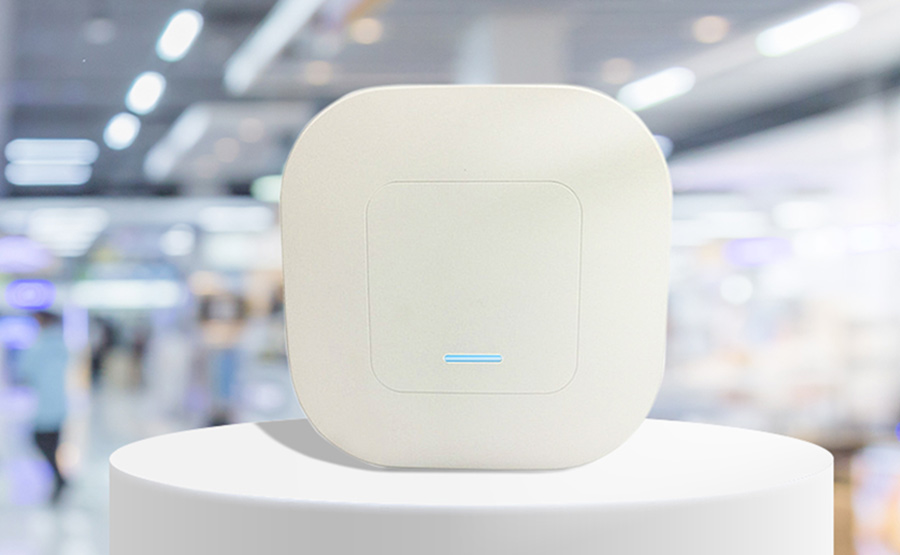
Its ESL solutions are designed for applications where retailers need centralized price and product information management, remote updates, and integration with retail systems such as POS, ERP, and CRM platforms. Datallen's digital signage solutions focus on information presentation and dynamic content management, supporting images, videos, text, promotional content, and QR codes through remote content control.
This combination allows retailers to address different parts of the store communication layer according to their operational priorities. A retailer may begin with ESLs for price accuracy, add digital signage for promotional communication, and later integrate additional inventory or sensing technologies as the digital infrastructure matures.
Part 3: Connecting the Online Digital Shelf with Physical Smart Shelves
The long-term opportunity is not to treat online and physical retail as two separate digitalization projects. They are increasingly connected through the same product, pricing, inventory, and customer data.
Physical stores are becoming increasingly instrumented environments. Smart shelves can capture what is happening at the point of sale, while online platforms provide information about customer demand, product discovery, and purchasing behavior. When these data streams are connected, retailers gain a more complete view of the customer journey.
From Shelf Conditions to Merchandising Data
A traditional shelf provides limited information. A connected shelf can provide signals about product availability, price, placement, replenishment needs, and customer-facing information. These signals can become merchandising data that helps retailers evaluate how products are performing at the store level.
For example, an online system may identify strong demand for a particular product while a physical store repeatedly experiences shelf-level stock-outs. Without connected shelf data, the retailer may simply see strong online demand. With smart shelves and accurate store-level inventory information, the retailer can identify the operational reason behind missed sales.
Price Consistency Across Channels
Price consistency is another important connection. Consumers can compare online prices with prices displayed in physical stores within seconds. Significant discrepancies can create confusion and reduce trust, particularly when customers use mobile devices while shopping in-store.
A connected pricing architecture can help synchronize online prices, POS systems, and ESLs. Instead of treating the physical shelf as the final manual step in the pricing process, retailers can make it part of the same digital workflow.
A More Complete Retail Digitalization Model
The online digital shelf and physical smart shelves therefore serve different but complementary purposes. The online layer helps products become discoverable and understandable. The physical layer makes the store more measurable, responsive, and operationally efficient.
Together, they create a broader retail digitalization model in which product data, pricing, inventory, merchandising, and customer experience can move more consistently between digital channels and physical stores.
FAQ: Digital Shelf and Smart Shelves
How do smart shelves work in a retail store?
Smart shelves combine connected hardware and software to collect or display shelf-level information. Depending on the application, they may use ESLs for digital pricing, RFID for inventory visibility, weight sensors for quantity monitoring, or computer vision for shelf analysis. Data can then be connected to POS, ERP, inventory, merchandising, or other retail systems.
What is the difference between a digital shelf and a smart shelf?
A digital shelf usually refers to the online product presence across digital commerce channels, while a smart shelf refers to a digitally connected physical shelf in a retail store. A digital shelf focuses heavily on product discovery, content, visibility, and conversion. A smart shelf focuses more on physical-store operations such as pricing, inventory, replenishment, merchandising, and shelf-level data collection.
How does RFID inventory management improve retail operations?
RFID inventory management can provide faster and more detailed visibility into product movement and inventory status. Instead of relying entirely on manual counting or individual barcode scanning, RFID readers can identify multiple tagged items within their reading range. When integrated with inventory and retail management systems, this can improve stock accuracy, support faster inventory checks, and help retailers identify discrepancies between system inventory and physical inventory.
Are electronic shelf labels worth the investment?
The business case depends on the retailer's product count, store size, price-change frequency, labor costs, promotion frequency, and integration requirements. ESLs tend to be particularly attractive for stores with thousands of SKUs, frequent price changes, or multiple locations. The return on investment should be evaluated not only through labor savings but also through pricing accuracy, faster promotion execution, reduced paper consumption, and improved operational consistency.
What is the typical cost of deploying smart shelves in a retail store?
The cost varies significantly based on store size, technology mix, and deployment scale. For a small store (under 2,000 sq ft) implementing basic ESL and a simple RFID system, costs can start around $2,000–$5,000. A mid-sized supermarket deploying full ESL, RFID, and basic sensor infrastructure typically ranges from $15,000 to $50,000. Large-format stores with computer vision and advanced digital signage can exceed $100,000. However, these are capital expenditures; operational savings from reduced labor, lower shrink, and fewer out-of-stocks often deliver a return on investment within 12 to 18 months for most deployments. Many technology providers now offer subscription-based models to lower the upfront barrier.
Do small retailers need to install a complete smart shelf system?
No. Smaller retailers can adopt smart shelf technology in stages rather than implementing every technology simultaneously. For many stores, ESLs can be a practical starting point because pricing and product information are common operational pain points. Retailers with inventory accuracy challenges may prioritize RFID, while stores with merchandising or shelf-availability problems may consider sensors or computer vision.
A phased approach can reduce initial investment and allow the retailer to measure results before expanding to additional stores or technology categories.
How should medium-sized and large retailers approach smart shelf deployment?
Medium-sized retailers can start with a representative store, product category, or operational process and use the pilot to evaluate integration, employee workflows, system reliability, and ROI. Once the model is proven, the same architecture can be extended to additional stores.
Large retailers with multiple locations may benefit from a modular architecture. ESLs, RFID, digital signage, computer vision, and inventory systems do not necessarily need to be deployed everywhere at the same time. A retailer can prioritize high-volume stores, high-SKU categories, frequently changing products, or locations where labor-intensive processes create the greatest operational cost.
What role does digital signage play in a smart shelf strategy?
Digital signage complements smart shelves by focusing on customer-facing communication rather than inventory sensing. It can display product information, promotions, videos, seasonal campaigns, pricing messages, QR codes, and other dynamic content. When managed centrally, digital signage can help retailers maintain consistent promotional communication across multiple stores while smart shelf technologies handle pricing, inventory, and operational data.
What systems should smart shelves integrate with?
Common integration targets include POS, ERP, inventory management, warehouse management, pricing, product information management, CRM, order management, and e-commerce platforms. The exact integration architecture depends on the retailer's existing technology stack. Good system planning is important because the value of smart shelf hardware increases when shelf-level data can be used by the systems that manage pricing, inventory, fulfillment, and merchandising.
What are the biggest challenges when deploying smart shelves?
Integration with legacy store systems is often the primary challenge. ESL and RFID solutions must connect to POS, inventory management, and merchandising software to deliver full value; if these systems are outdated or siloed, data reconciliation can become a bottleneck. Staff training and change management are equally important—associates accustomed to paper tags and manual counts may resist new workflows. Finally, choosing the right technology partner is critical. Retailers should look for providers offering robust APIs, clear integration roadmaps, and ongoing support rather than standalone hardware.
Conclusion
The concept of the digital shelf is expanding beyond online product presentation. In physical retail, smart shelves are turning traditional fixtures into connected operational infrastructure that can support pricing accuracy, inventory visibility, replenishment, merchandising, and omnichannel fulfillment.
For retailers, the most effective strategy is not necessarily to deploy every available technology at once. A more practical approach is to identify the most costly shelf-level problems, select the technology that directly addresses them, connect it with existing retail systems, and expand the deployment based on measurable results.
For more insights, check out:
1. Smart Shelf Technology-The Future of Inventory, Efficiency, and Green Retailing
2. Top 10 Digital Signage Manufacturers to Consider in 2026 And How to Choose
3. Creative Retail Display Ideas with E Ink Display for Quick Service Restaurants
4. 25 Unique Retail Display Ideas for Shops of All Sizes
5. The Importance of Digital Transformation in the Retail Industry