Walk into any modern hospital today, and the first thing you will notice is the proliferation of digital screens. What was once a sea of static posters, paper signs, and dry-erase boards is rapidly giving way to dynamic, centrally managed displays that inform, guide, and reassure. This shift is not merely aesthetic—it represents a fundamental rethinking of how healthcare facilities communicate. As hospitals embrace the smart hospital model, digital screens have emerged as indispensable infrastructure for delivering better patient experiences, streamlining staff workflows, and even generating new revenue streams.
Why Traditional Hospital Communication Is No Longer Enough
Information Overload in Healthcare Facilities
Hospitals are among the most information-dense environments on earth. Multiple departments operate simultaneously. Schedules change by the minute. Emergency announcements demand immediate attention. Relying on printed materials and static signage to manage this complexity is no longer viable—information becomes outdated before it is even posted. Commercial digital screens solve this by delivering real-time updates the moment information changes.
Rising Patient Expectations
Today's healthcare consumers expect the same speed and transparency they experience in other service industries. They want faster access to information, reduced uncertainty during waiting periods, and a healthcare experience that feels modern and respectful of their time. Static signage cannot meet these expectations. Digital screens can.
The Connection Between Communication Quality and Patient Satisfaction
Communication quality directly influences patient trust, navigation confidence, and overall hospital reputation. Research shows that a single percentage point improvement in HCAHPS scores can translate into hundreds of thousands of dollars in reimbursement for the average U.S. hospital. Digital screens that display real-time wait times and service updates can reduce perceived wait times by up to 35 percent. When patients feel informed, they feel cared for.
What Are Digital Screens in Hospitals?
Understanding Commercial Digital Screens
Commercial digital screens in healthcare settings are more than just televisions mounted on walls. They are part of an integrated ecosystem comprising LCD displays, centralized content management software, and the ability to push real-time content updates across an entire facility or health system. These systems replace the need for individual manual updates at each location.
Difference Between Digital Screens and Traditional Hospital Signage
Traditional signage is static, costly to update, and limited to one message at a time. Digital screens, by contrast, can display multiple messages in rotation, adapt content based on time of day or audience, and pull live data from hospital information systems. This flexibility makes them vastly more useful in the fast-paced healthcare environment.
Hospital Areas Where Digital Screens Create the Greatest Impact
Main Lobby and Reception
The main lobby is the hospital's front door—and first impressions matter. Digital screens here can display welcome information, hospital profiles, specialist introductions, navigation assistance, and ongoing health campaigns. For visitors navigating an unfamiliar campus, wayfinding content on digital screens reduces stress and prevents missed appointments.
Waiting Areas and Outpatient Clinics
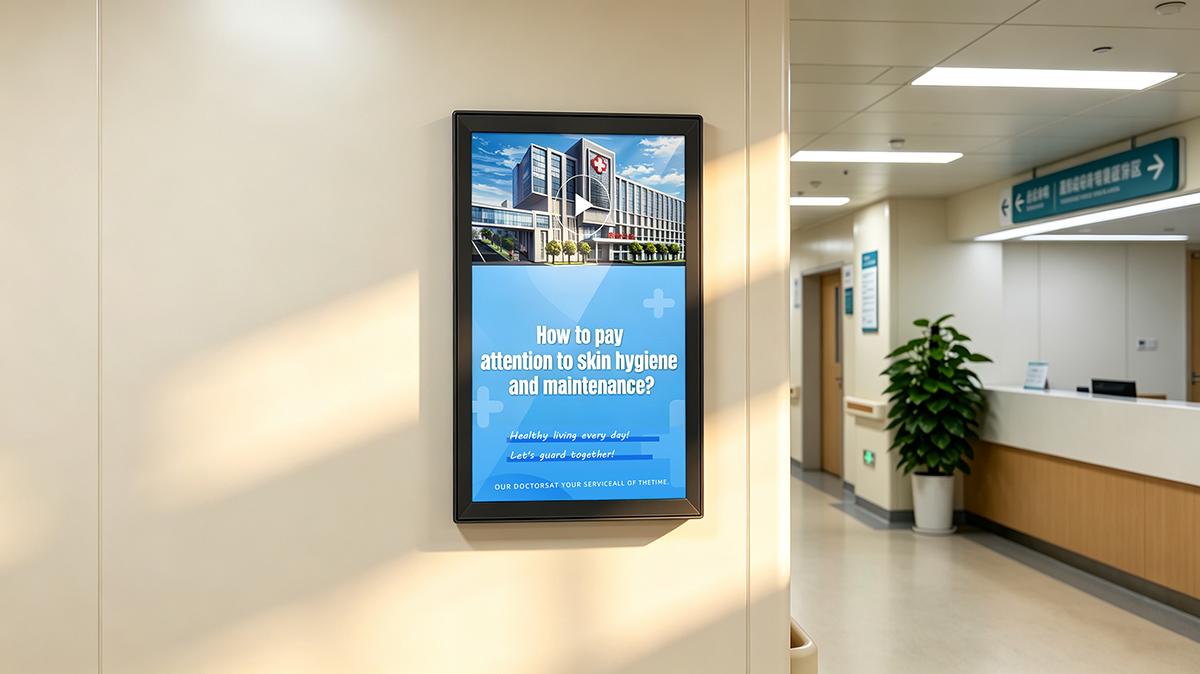
Waiting areas are where patient anxiety peaks. Digital screens can mitigate this by showing queue information, doctor schedules, health education content, estimated waiting times, and seasonal disease prevention tips. Engaging visual content has been shown to lower stress levels by 37 percent, especially for families with young children.
Corridors and Public Walkways
High-traffic corridors are prime locations for educational videos, wellness tips, emergency evacuation guidance, and public health awareness campaigns. These digital screens capture attention during moments of passive movement, turning otherwise wasted time into opportunities for patient education.
Elevators and Elevator Lobbies
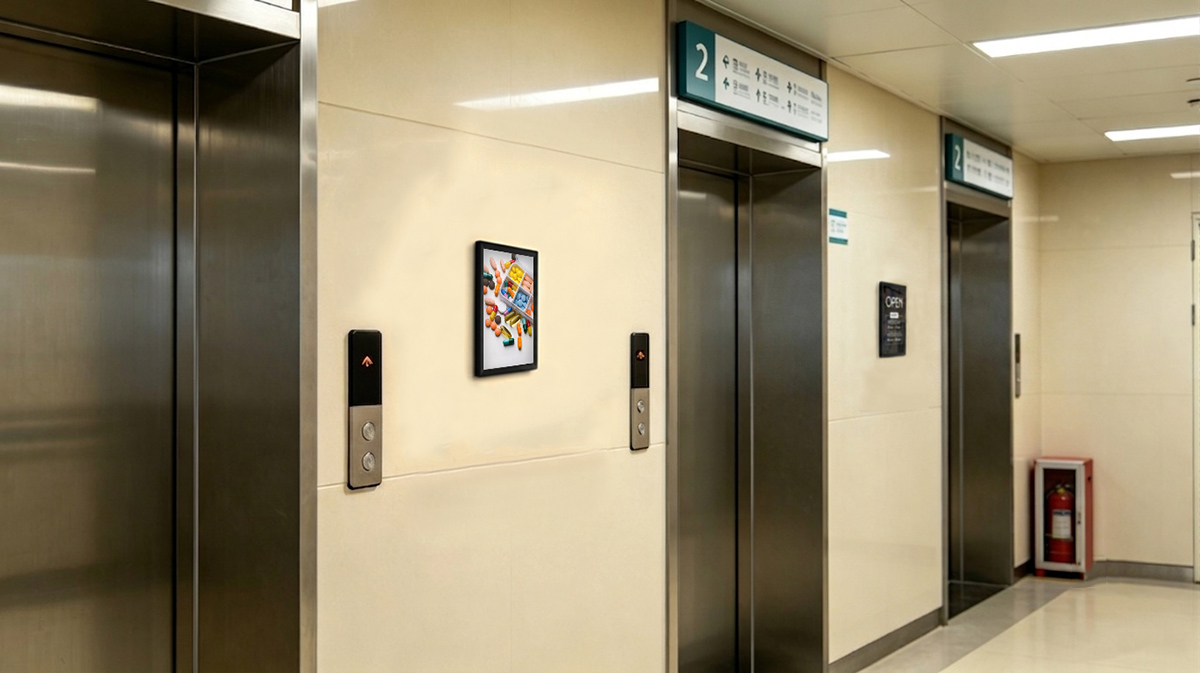
Elevator areas offer captive audiences with dwell times of 30 to 60 seconds. Digital screens here can broadcast hospital announcements, safety reminders, public service campaigns, and—importantly—advertising digital display opportunities that generate additional revenue for the facility.
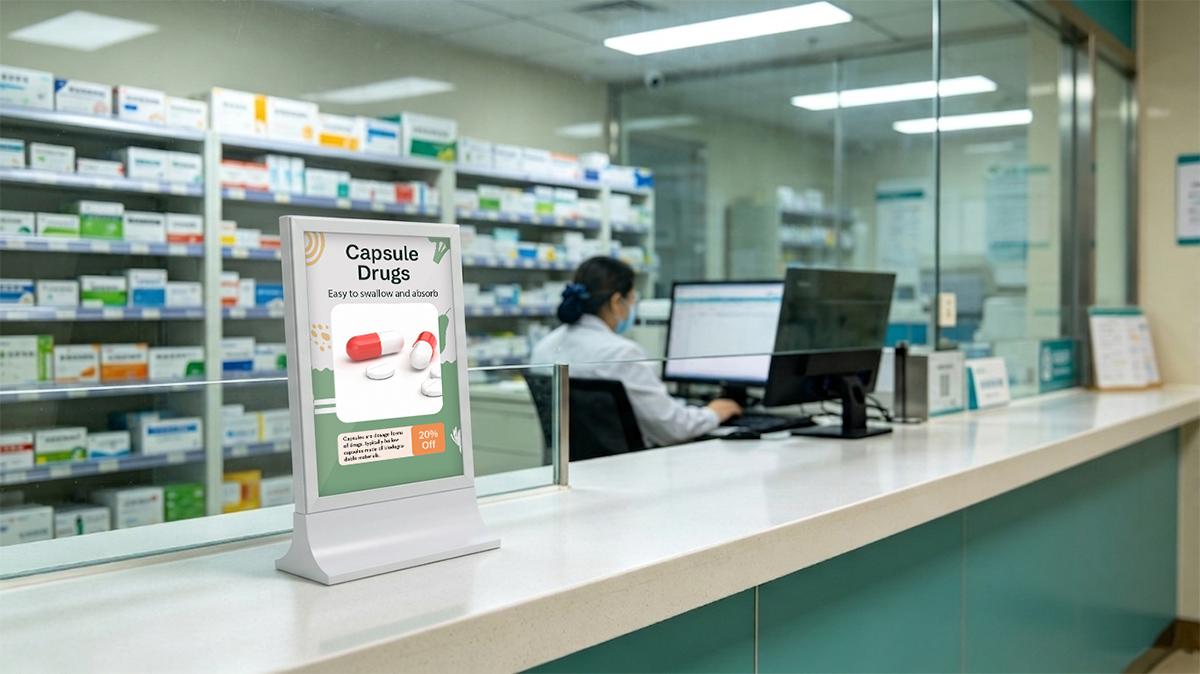
Pharmacy and Payment Areas
Pharmacy wait times can be a major source of patient frustration. Digital screens displaying queue updates, pharmacy guidance, insurance and payment instructions, and medication reminders help manage expectations and reduce perceived wait times.
Nurse Stations
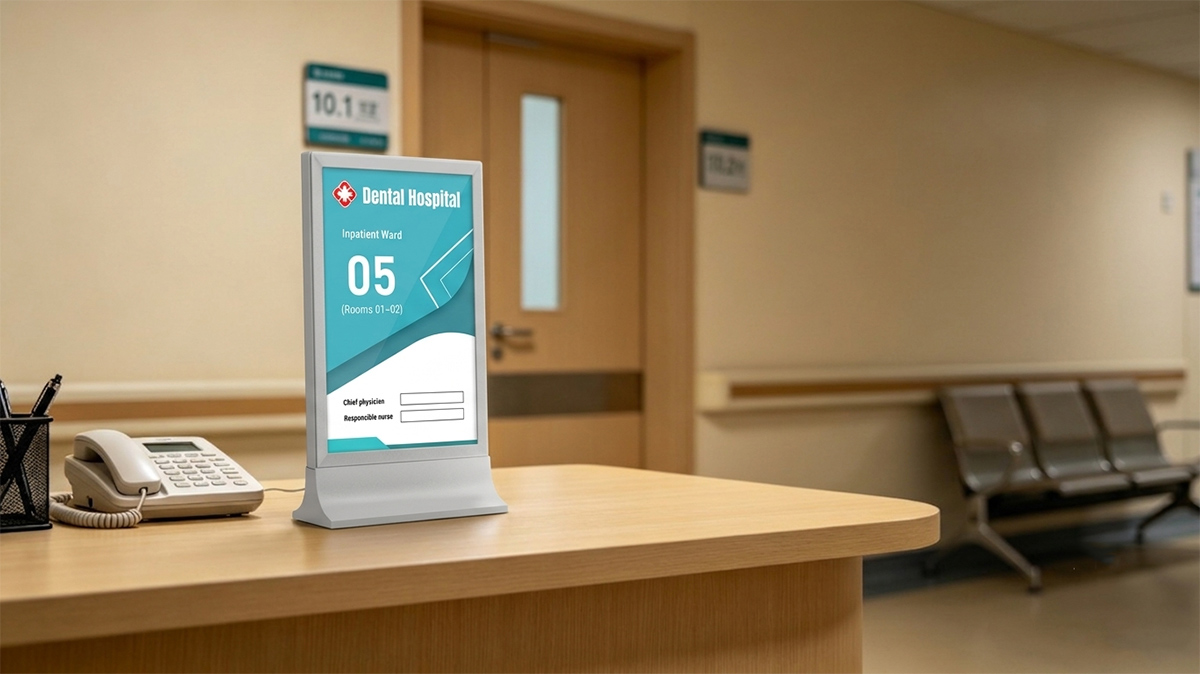
Behind the scenes, digital screens at nurse stations support internal communication by displaying shift information, emergency notices, and department coordination updates. These screens keep care teams aligned without adding to their already heavy communication burden.
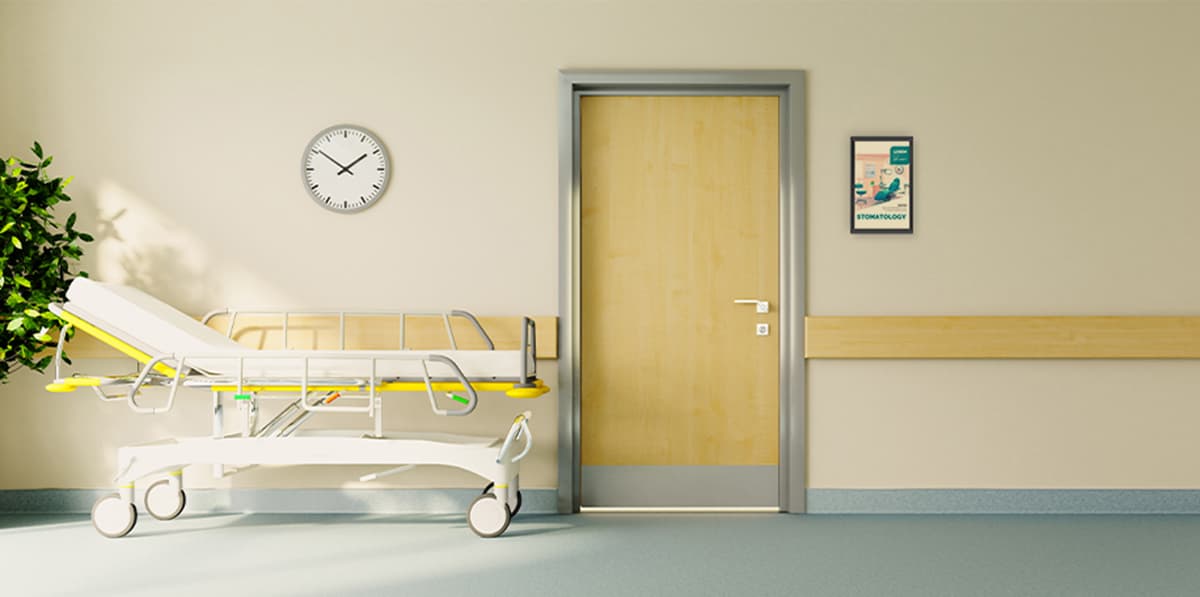
Patient Rooms and Ward Entrances
Digital door signs outside patient rooms represent one of the most impactful applications. These screens can display electronic room identification, care team information, nursing reminders, visitor notices, and privacy-sensitive status indicators.
Cafeterias, Visitor Lounges and Public Spaces
Even non-clinical spaces benefit from digital screens. Cafeterias can display daily menus. Visitor lounges can promote hospital services, wellness campaigns, and community events. These touchpoints reinforce the hospital's brand and commitment to patient-centered care.
Beyond Information Display: How Digital Screens Improve Hospital Operations
Reducing Printing Costs
The financial impact of replacing printed materials is substantial. Atlantic Health System reported saving $120,000 per year in print costs alone after replacing static signs with digital displays across its five hospitals.
Faster Emergency Communication
When emergencies occur, every second counts. Digital screens enable the instant broadcast of critical alerts across an entire facility or health system, ensuring that patients, visitors, and staff receive timely information.
Easier Content Management Across Multiple Buildings
For multi-building hospital campuses or health systems with multiple locations, centralized content management is transformative. Administrators can update guidance simultaneously across venues with a single change, ensuring consistent messaging everywhere.
Supporting Hospital Branding
Consistent, professional digital screens reinforce hospital branding and convey modernity and competence. This matters for patient acquisition, staff recruitment, and community perception.
Helping Hospitals Move Toward a Smart Health Solution
Digital screens are a foundational component of any smart health solution. They serve as the visible interface for a hospital's broader digital transformation, connecting patients and staff to the underlying data and systems that make healthcare more efficient and effective.
Benefits for Different Hospital Stakeholders
Benefits for Patients
Patients gain better navigation, less anxiety, and more transparent information. When patients understand what is happening and when, they trust the process more and report higher satisfaction scores.
Benefits for Medical Staff
Care teams benefit from less repetitive communication, faster updates, and improved workflow. A HIMSS Analytics survey found that hospitals using digital screens for announcements and wayfinding saved an average of 1,866 labor hours annually—equivalent to almost a full-time employee.
Benefits for Hospital Administrators
Administrators gain operational efficiency, lower maintenance costs, and better communication consistency across the organization. These improvements translate directly to the bottom line and to higher patient experience scores.
How Digital Screens Support Infection Control and Public Health
In the post-pandemic healthcare environment, infection control remains paramount. Digital screens support this through contactless communication that eliminates the need for shared paper materials. They enable rapid outbreak notifications, seasonal disease alerts, hygiene reminders, vaccination campaigns, and emergency preparedness messaging—all updated in real time without physical contact.
Integrating Digital Screens into a Smart Hospital Ecosystem
Modern digital screens do not operate in isolation. They integrate with Hospital Information Systems (HIS), queue management platforms, appointment systems, and ERP solutions. Cloud-based content management enables multi-location synchronization, ensuring that every screen in every building displays the right information at the right time. This integration is what transforms a collection of displays into a true smart health solution.
Choosing the Right Commercial Digital Screens for Healthcare Facilities
Display Size Considerations
Screen size should match the viewing distance and environment—larger screens for lobbies and corridors, smaller screens for nurse stations and patient rooms.
Brightness
Healthcare environments vary widely in ambient light. Screens in brightly lit corridors and lobbies require higher brightness levels for visibility.
Viewing Angle
Wide viewing angles ensure content remains readable from multiple directions—critical in waiting areas and corridors where people approach from various angles.
24/7 Reliability
Hospital digital screens must operate continuously. Commercial-grade hardware designed for 24/7 use is essential to avoid downtime.
Easy Remote Management
Cloud-based content management systems enable IT teams to manage and update content from anywhere, reducing the need for on-site technical support.
Flexible Installation Options
Wall-mounted, ceiling-mounted, freestanding, and desktop configurations accommodate different spaces and use cases.
Long-Term Operating Costs
Energy-efficient displays and durable hardware reduce total cost of ownership over the system's lifespan.
Security and Permission Management
Role-based access controls ensure that only authorized personnel can modify content, maintaining both security and compliance.
Why Datallen Digital Screens Are Designed for Modern Healthcare
Datallen brings enterprise-grade LCD digital signage to healthcare environments with a product lineup purpose-built for clinical settings. From compact 10.1-inch to 15.6-inch desktop models ideal for nurse stations and reception desks, to hanging displays and wall-mounted screens for corridors, waiting areas, and patient rooms—Datallen hardware is engineered for the demanding 24/7 operation of healthcare facilities. The Datallen cloud-based CMS enables scheduled content deployment, remote updates, and multi-building management from a single dashboard. Support for rich media—including video, images, and live data feeds —ensures that hospitals can deliver the engaging, informative content that patients and staff expect. With stable commercial hardware designed for continuous operation and minimal maintenance, Datallen helps healthcare providers build communication infrastructure that lasts.
Frequently Asked Questions (FAQ)
Are digital screens suitable for small clinics as well as large hospitals?
Absolutely. Scalable solutions mean that a single digital screen in a small clinic can be just as effective as a network of hundreds in a large hospital system. The same cloud-based content management tools work at any scale.
Can hospital digital screens display different content at different times?
Yes. Content scheduling is a core feature of modern digital signage systems. Screens can display morning announcements, afternoon health education, and evening visitor information automatically—all without manual intervention.
What types of information should hospitals avoid displaying on public digital screens?
No Protected Health Information (PHI) should be displayed on public digital screens to ensure compliance with HIPAA regulations. This includes patient names, medical record numbers, diagnoses, or any identifiable health information. Queue systems should use coded numbers rather than patient names.
Are commercial digital screens difficult to maintain?
Modern commercial digital screens require minimal maintenance beyond occasional cleaning and standard hardware care. Cloud-based management means software updates and content changes happen remotely, eliminating the need for on-site technical support for routine updates.
Can digital screens generate additional revenue for hospitals?
Yes. Advertising digital display networks in healthcare settings can generate significant revenue. Point-of-care advertising represents over $1.2 billion in annual pharma marketing spend actively seeking placement in clinical environments. Hospitals can monetize screens in waiting areas, lobbies, and other public spaces through direct ad sales or programmatic networks.
Can hospital digital signage integrate with existing EMR/EHR systems?
Yes, though with important privacy considerations. Digital door signs and clinical dashboards can pull real-time data from EHR systems, but these displays must be powered directly from approved clinical systems to ensure data integrity and HIPAA compliance.
Can digital signage in hospitals generate advertising revenue?
Yes. This is one of the most compelling financial arguments for digital screens in healthcare. By partnering with healthcare advertising networks or managing ad inventory directly, hospitals can turn waiting room digital screens into revenue-generating assets that offset the cost of the system itself.
Conclusion
From improving navigation and patient education to supporting emergency communication and operational management, digital screens provide hospitals with a flexible way to deliver meaningful information. Their value is not limited to displaying content; they help create a healthcare environment where information is easier to access, understand, and act upon.
For more insights, check out:
2. Top 10 Digital Signage Manufacturers to Consider in 2026 And How to Choose
3. Smart Hotel Solutions: How Electronic Shelf Labels for Hotels Increases Revenue and Efficiency
4. How to Choose Retail Store Digital Signage Solutions: Total Cost & Key Considerations
5. Why Datallen’s Digital Display Solutions Drive Higher Efficiency in Retail