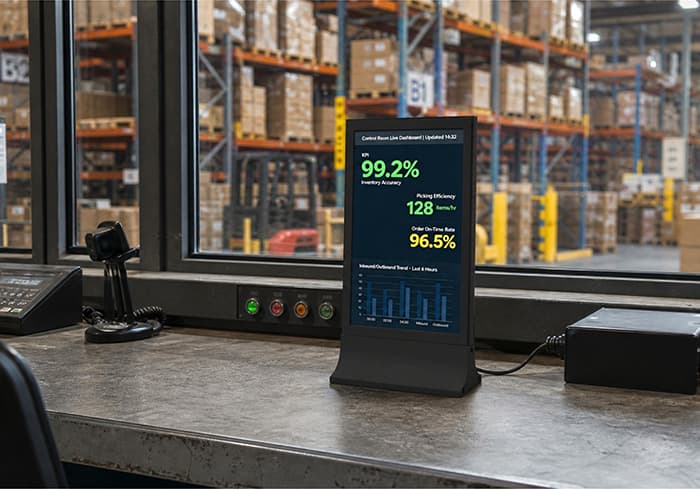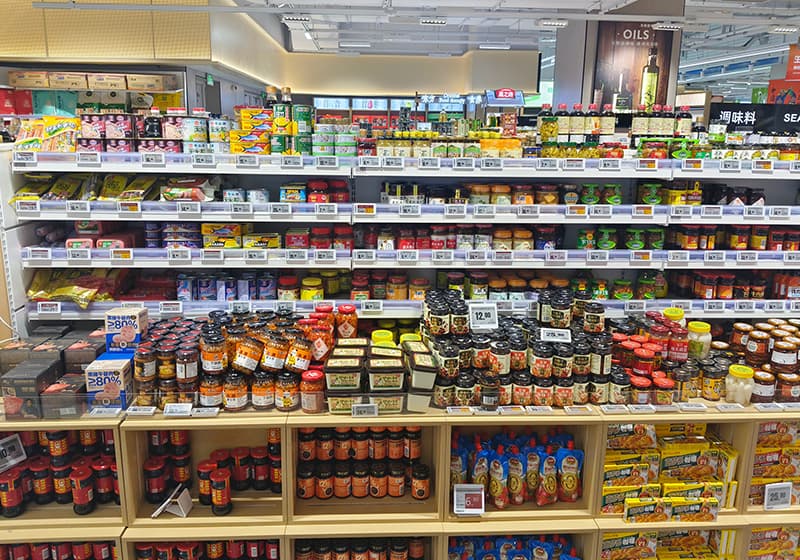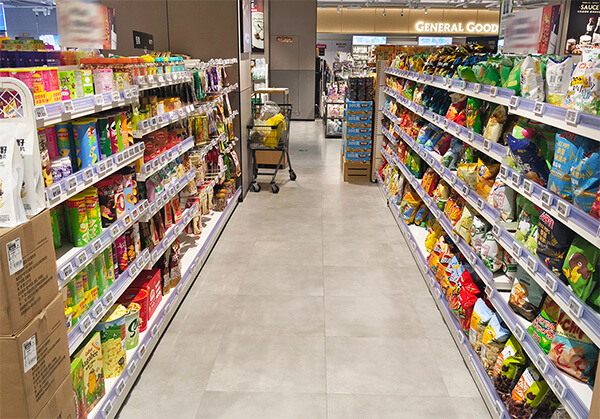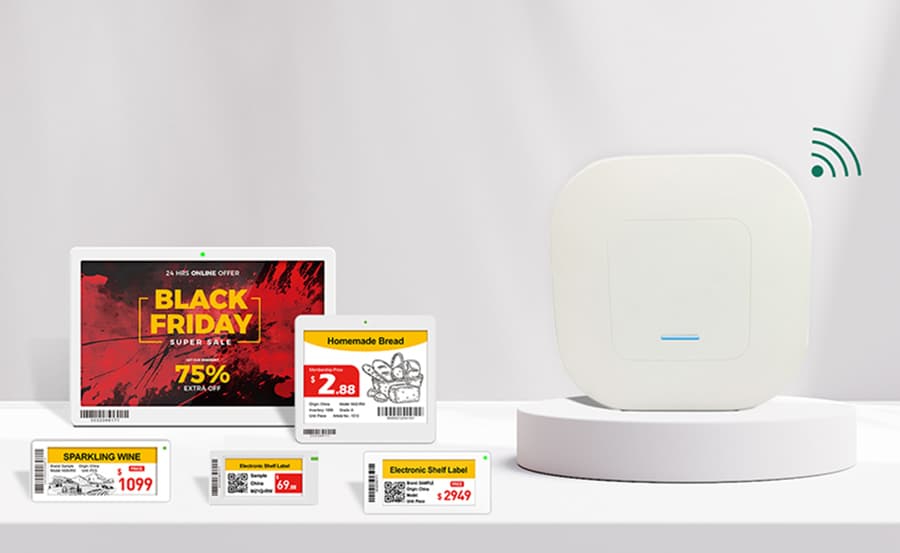
The gaming cafe industry has undergone a remarkable transformation over the past decade. What was once a row of computers in a dimly lit room has evolved into a sophisticated entertainment destination where atmosphere matters as much as hardware. Today's gamers don't just want high-end PCs and low latency—they want an experience.
This is where display signage enters the picture. Whether you're running a neighborhood LAN center or a sprawling esports hub, the screens on your walls, counters, and entryways are shaping how players perceive your brand, what they buy, and how long they stay.
Why Gaming Cafes Need Display Signage
The numbers don't lie. Digital signage captures significantly more views than static signage, and viewers recall digital content compared to traditional alternatives. For a gaming cafe competing for foot traffic and player loyalty, that level of engagement is too significant to ignore.
Immersive atmosphere sells. Gaming is fundamentally an experiential activity. Players choose where to play based not just on specs, but on how a space makes them feel. Display signage transforms a sterile room of computers into a dynamic, living environment that reflects the energy of gaming culture. Tournament brackets scrolling on a screen, countdowns to upcoming events, highlight reels from recent competitions—these elements make players feel like they're part of something bigger than just a place to rent a PC.
Revenue impact is measurable. Digital menu boards in food and beverage settings have been shown to lift sales substantially with a relatively short payback period. When applied to gaming cafes—where energy drinks, snacks, and combo meals are high-margin items—the revenue potential is significant. Beyond food and beverage, display signage drives membership sales, promotes tournament registrations, and highlights limited-time offers that encourage players to spend more during each visit.
The global digital signage market continues to expand rapidly, with the U.S. market alone estimated at over $9 billion in 2025 and projected to reach approximately $13 billion by 2030. This growth reflects the increasing recognition across industries—including gaming and hospitality—that dynamic visual communication delivers measurable business results.
Key Applications of Display Signage in Gaming Cafes
Display signage can be deployed throughout a gaming cafe to enhance operations, improve customer experience, and drive revenue. Here are the most impactful applications across different zones of your venue.
1. Private Room Entry Displays
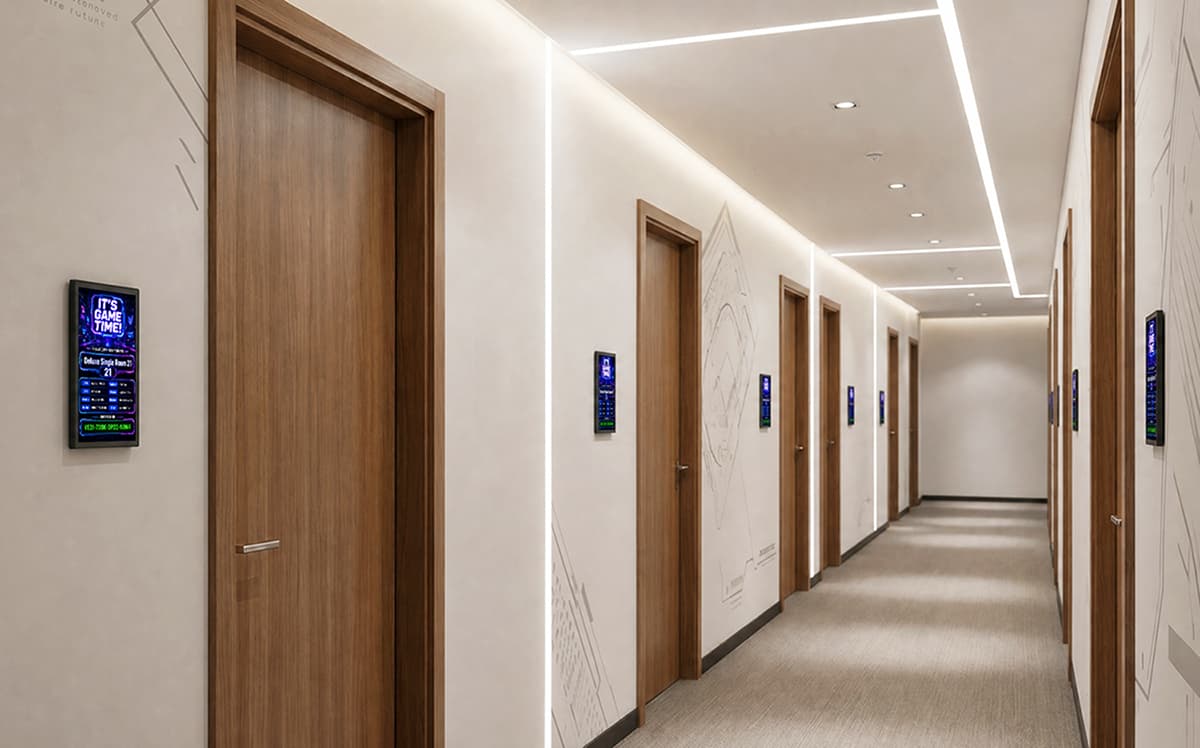
Every private gaming room or VIP booth presents an opportunity for display signage. A compact LCD screen mounted outside each room can serve as a digital room sign, displaying:
Room number and availability status — instantly visible to staff and players
Game theme or console type — PlayStation, Xbox, PC, or Nintendo Switch
Equipment specifications — GPU model, monitor refresh rate, peripheral details
Current occupancy and reservation information
Custom branding — room names, logos, or themed artwork
This application transforms a simple door sign into a dynamic information hub. When a room is vacant, the screen can display promotional content to encourage walk-in bookings. When occupied, it shows session time remaining or allows players to request service with a simple visual cue to staff.
2. Reception and Checkout Counter Displays
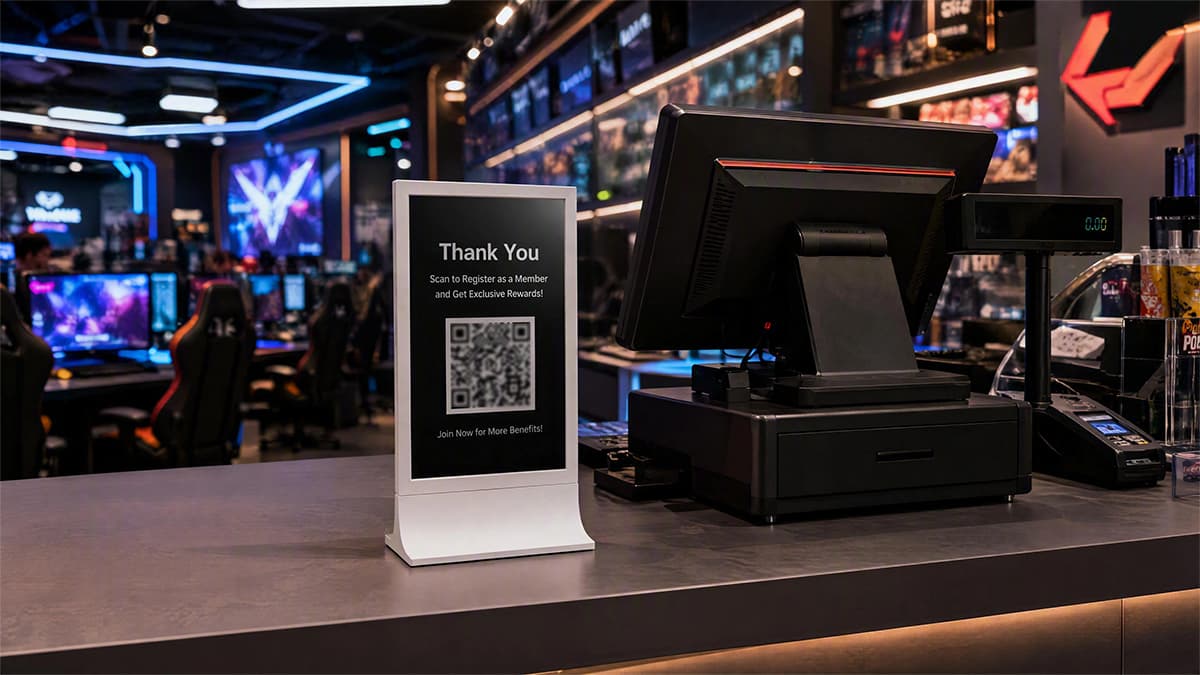
The front counter is where transactions happen, and first impressions are formed. Desktop display signage at the reception area can showcase:
Pricing menus — hourly rates, day passes, and membership tiers
Current promotions and bundle deals
Membership and loyalty program information
Payment options accepted
Wait times and seat availability
Upcoming tournament registration deadlines
Desktop digital signage at the point of sale captures customers when they are already in a buying mindset. A screen displaying a limited-time offer or a membership upgrade prompt can significantly increase average transaction value.
3. Gaming Floor and Tournament Displays
The main gaming area is the heart of your gaming cafe. Wall-mounted display signage in this zone serves multiple functions:
Live tournament brackets — real-time updates on match progress
Player rankings and leaderboards — fostering healthy competition
Event countdowns — building anticipation for upcoming tournaments
Dynamic advertising — rotating promotions from sponsors or partners
Community highlights — showcasing player achievements and social media content
Live gameplay feeds — broadcasting matches from the tournament station
In esports arenas, digital signage solutions are employed to display live tournament brackets, player statistics, and audience engagement features, keeping spectators informed and engaged throughout the event. This fosters an exciting and immersive environment that encourages spectators to stay longer and spend more.
Post-event signage has been shown to increase dwell time and revenue from ancillary operations because guests stick around rather than leaving immediately after events conclude. The same principle applies to gaming cafe tournaments—display signage that promotes what's happening next keeps players in your venue longer.
4. Food and Beverage Digital Menu Boards
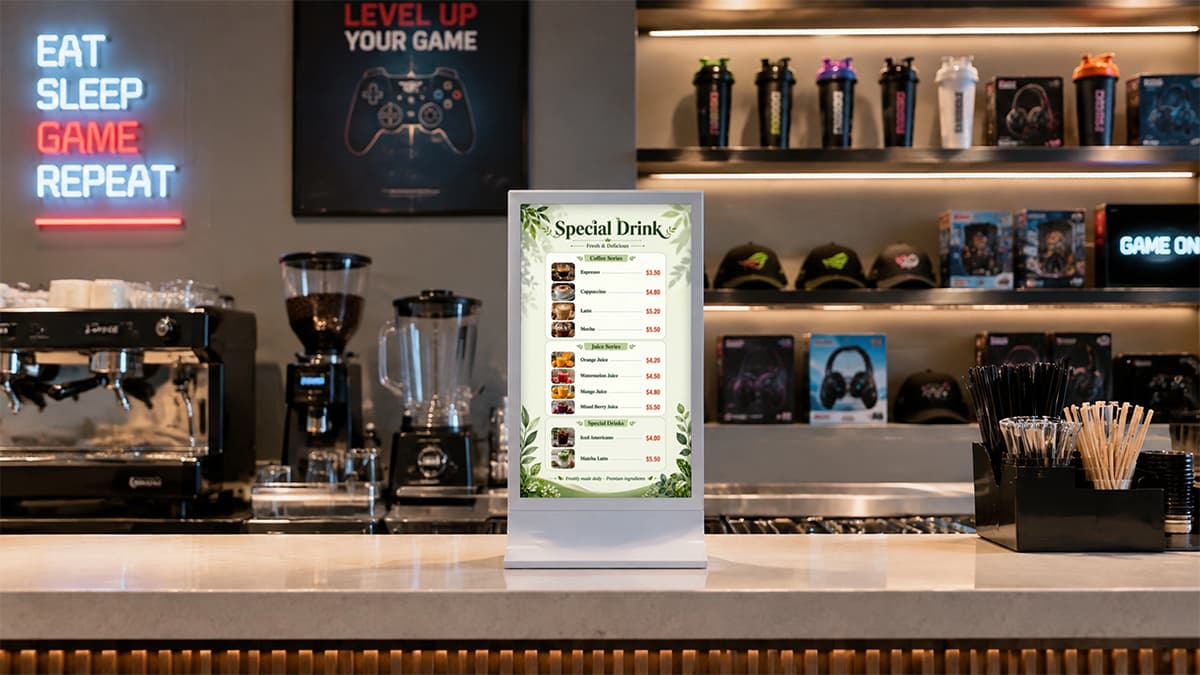
The food and beverage area is one of the highest-margin revenue centers in any gaming cafe. Digital menu boards using display signage technology offer significant advantages over static menus:
High-quality food imagery — appetizing visuals that drive impulse purchases
Dynamic pricing and promotion updates — change specials instantly
Dayparting — breakfast menus in the morning, snack-focused in the afternoon, meal deals in the evening
Combo and upsell suggestions — "Add a large drink for just $2 more"
Limited-time offer countdowns — creating urgency
The hospitality digital signage market, which includes digital menu boards for cafes and restaurants, was valued at over $2.4 billion in 2024 and is projected to grow to approximately $4.1 billion by 2032. This growth reflects the proven ROI of digital menus in driving food and beverage revenue.
5. Corridor and Wayfinding Displays
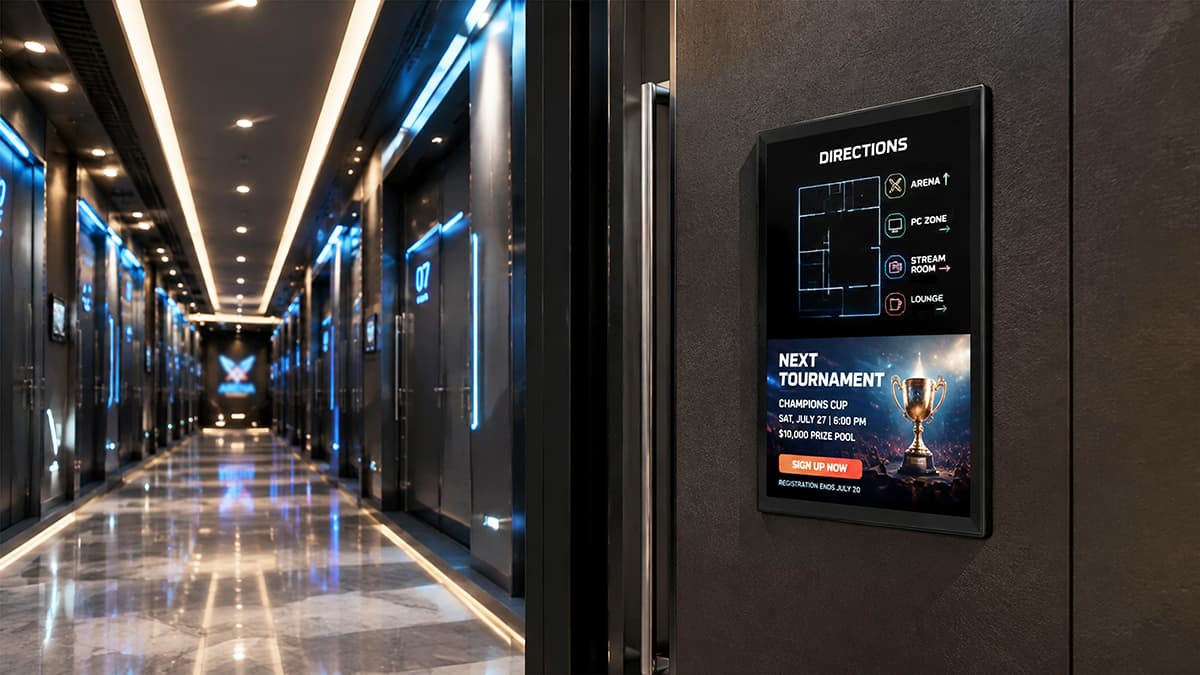
The hallways and corridors connecting different zones of your gaming cafe are prime real estate for display signage. As players move between the gaming floor, private rooms, restrooms, and the food and beverage area, strategically placed screens can:
Provide directional guidance — helping first-time visitors navigate your venue
Promote events and tournaments — capturing attention during transit
Showcase brand storytelling — reinforcing your cafe's identity and culture
Display sponsor content — monetizing wall space with partner advertising
Communicate venue rules and policies — maintaining order without being intrusive
Wayfinding signage reduces staff interruptions and improves the customer experience. A simple screen near intersections showing a venue map, zone labels, and current availability helps players find their way instantly. This is particularly valuable during tournaments or peak hours when staff is busy.
Technical Considerations for Gaming Cafe Display Signage
Selecting the right display signage hardware for your gaming cafe requires understanding the unique demands of the environment. Here are the key factors to evaluate.
Commercial-Grade vs. Consumer Displays
This is the most common question operators ask. The honest answer depends on hours and placement.
Use commercial-grade display signage when:
The screen runs more than 12 hours a day
The screen is mounted in portrait (vertical) orientation
You want it to last 5 to 7 years without reliability issues
Gaming cafes typically operate long hours, often 24/7. Consumer TVs are not designed for this duty cycle. Commercial LCD display signage is built for continuous operation, with better heat dissipation, more durable components, and warranties that actually cover commercial use.
Form Factor and Installation Flexibility
Gaming cafes come in all shapes and sizes, and display signage must adapt to diverse spatial constraints. Consider these form factor options:
Desktop displays — ideal for counters, reception areas, and point-of-sale locations
Wall-mounted displays — suitable for gaming floors, corridors, and entryways
Portable displays — flexible units that can be moved to different locations as needed
Hanging displays — space-saving solutions for shelves, rails, and overhead mounting
The ability to deploy screens in multiple form factors across different zones of your gaming cafe creates a cohesive visual ecosystem that enhances the overall player experience.
Centralized Content Management
Managing content across multiple screens in a gaming cafe can become chaotic without the right system. Cloud-based content management systems allow operators to update every display terminal with just one click. Tournament schedules change, menu items sell out, promotions end—and with a centralized CMS, updates happen instantly across all screens.
Smart content management allows scheduling of tasks, synchronization of content across multiple screens, and template-based updates—all accessible via PC or mobile app. For gaming cafe chains with multiple locations, this scalability is particularly valuable.
About Datallen
For gaming cafe operators, system integrators, and distributors seeking reliable digital signage solutions for commercial environments, Datallen offers a comprehensive product lineup. With over 20 years of accumulated experience in wireless technology and digital signage manufacturing, Datallen's LCD digital signage products are engineered for continuous 24/7 operation with exceptional durability and stability. The 10.1-inch portable LCD digital display screens are lightweight and easy to mount, making them ideal for room entry signs, corridor installations, and space-constrained applications.
The 15.6-inch desktop digital signage delivers Full HD resolution (1920×1080) with an IPS panel that ensures accurate colors and a 178° viewing angle—perfect for countertop menu boards and reception area displays where readability from multiple angles matters.
Both form factors feature Wi-Fi connectivity for instant content updates via cloud-based management, eliminating the need for on-site operation. Guide rails are available in multiple lengths to accommodate different venue configurations, while desktop mounting options include screw-lock, plug-in, and stand-base solutions for stable, tool-free setup. Whether you are equipping a single-location gaming cafe or rolling out signage across a multi-venue chain, Datallen provides the hardware foundation for a scalable, low-maintenance display signage network.
Overcoming Common Display Signage Challenges
Even the best display signage strategy can fail if common implementation challenges aren't addressed. Here's how to avoid the most frequent pitfalls.
Placement and Visibility
The best content in the world can't fix a screen nobody sees. One of the most common mistakes in display signage deployment is mounting screens too high. Average standing eye level is approximately 5 to 5.5 feet. A screen mounted 8 feet high requires an uncomfortable neck tilt—that's discomfort, not engagement.
Best practice: Center the screen at 5 to 6 feet from the floor for standing viewers. For areas where players are seated (near gaming stations), adjust based on the typical seated eye height of roughly 4 feet. For countertop displays, position screens at a slight upward angle to improve visibility for customers of varying heights.
Content Freshness and Engagement
Display signage that shows the same content day after day becomes invisible—customers stop noticing it. The most common signage failure we see isn't bad hardware or bad software; it's no defined job and no content rotation plan.
Best practice: Define what each screen exists to do. A screen by the register exists to sell more food. A screen near the entrance exists to promote events. A screen in the gaming area exists to build tournament excitement. Rotate content regularly, use dayparting to show different content at different times, and refresh creative assets monthly to maintain impact.
With cloud-based management, updating content across all screens in your gaming cafe takes minutes rather than hours. This ease of updating encourages more frequent content refreshes, keeping your display signage relevant and engaging.
Hardware Reliability and Continuous Operation
Gaming cafes operate around the clock, and so should your display signage. Consumer-grade displays are not engineered for the thermal demands of 24/7 operation, leading to premature failures and unexpected replacement costs.
Commercial-grade LCD display signage is designed for continuous operation with robust thermal management, durable components, and energy-efficient power consumption that keeps electricity costs manageable. LED backlight technology ensures bright visuals with low power consumption, supporting reliable long-term operation.
Visual Consistency Across Screen Types
When deploying multiple screens across different zones of your gaming cafe, visual consistency matters. Mismatched color temperatures, varying resolutions, and inconsistent brightness levels create a disjointed experience that undermines your brand.
IPS panel technology addresses this challenge by ensuring accurate colors, stable brightness, and wide viewing angles. Content remains vivid and consistent from different directions in high-traffic commercial spaces. This is particularly important in gaming cafe environments where players view screens from various positions and distances.
The Business Case for Display Signage in Gaming Cafes
Beyond the aesthetic and operational benefits, display signage delivers a compelling return on investment for gaming cafe operators. Here's what the data shows.
Revenue uplift across multiple streams: Digital menu boards drive food and beverage sales through high-quality imagery and dynamic promotions. Tournament displays increase participation and spectator engagement. Promotional screens boost membership sign-ups and loyalty program enrollment. Each screen, when deployed with clear purpose, contributes to the bottom line.
Operational efficiency: Centralized content management eliminates the printing costs and labor associated with static signage. Updates that once required hours of manual work now happen in minutes. For multi-location operators, the efficiency gains compound significantly.
Competitive differentiation: In a crowded market, gaming cafe operators need every advantage. Display signage creates a modern, tech-forward atmosphere that appeals to the gaming demographic. It signals that your venue is invested in the player experience, not just the hardware.
FAQ: Common Questions About Display Signage for Gaming Cafes
What is the first step in buying display signage for a gaming cafe?
Start with a clear statement of what each screen is supposed to do. Define the job before you define the hardware. Are you trying to sell more food at the counter? Promote tournament registrations? Reduce repeated staff questions about pricing and hours? Once you have a clear job for each screen, you can match the right size, placement, and content strategy to that job.
How do I know if I need commercial displays or consumer TVs?
The answer depends on hours and placement. If your screens run more than 12 hours a day, are mounted in portrait orientation, or are in a brightly lit space, commercial displays are the right choice. Gaming cafes typically operate 24/7, and consumer TVs are not engineered for that duty cycle. Commercial displays are built with better thermal management, more durable components, and warranties that cover commercial use—saving you from premature failures and unexpected replacement costs.
What hardware is essential for a gaming cafe digital signage system?
Every digital signage deployment requires three core components: a display screen, a media player (the device that stores and runs the content), and software (the content management system that lets you create, schedule, and update what plays on each screen). For gaming cafes, the display should be commercial-grade. The media player can be built into the display (system-on-chip) or external. The software should support remote management, scheduling, and easy content updates.
Can I manage multiple screens across different gaming cafe locations from one place?
Yes. Cloud-based content management systems allow you to control screens across multiple locations from a single dashboard. This is essential for gaming cafe chains or operators planning to expand. A scalable system should accommodate your current single-location needs while supporting future growth without requiring a complete hardware or software replacement.
How do I prevent display signage content from becoming stale?
Content staleness is the most common failure in digital signage—not bad hardware or software. The solution is intentional content planning. Use dayparting to show different content at different times of day (breakfast menu in the morning, snack-focused in the afternoon). Schedule regular content refreshes—at least monthly. And most importantly, every screen should have a clear, measurable job; if it doesn't, viewers will stop noticing it.
What should I look for in digital signage software for a gaming cafe?
Look for intelligent content scheduling (automatic transitions between morning and evening content), seamless remote management (updates from anywhere via web browser), and dynamic template customization that doesn't require graphic design expertise. The software should also support real-time updates for tournament brackets, pricing changes, and promotions—all without technical intervention on-site.
How reliable is Wi-Fi-enabled display signage in a busy gaming cafe?
Modern Wi-Fi-enabled display signage is highly reliable when deployed with a stable network infrastructure. Content updates push instantly over Wi-Fi, eliminating the need for physical connections. For gaming cafes with existing Wi-Fi networks, adding digital signage typically requires no additional infrastructure investment.
What mistakes should I avoid when installing display signage in a gaming cafe?
The most common mistakes include: neglecting proper measurements and mounting screens at the wrong height; choosing incompatible hardware that doesn't work with your chosen software; underestimating the importance of the content management system; and overlooking scalability—choosing a system that works for one location but can't expand to multiple venues. Avoiding these pitfalls starts with proper planning before any hardware is purchased.
What size display signage should I use for different areas of my gaming cafe?
Size depends on viewing distance and application. For counter displays viewed from 3 to 6 feet away (pricing menus, promotions), 10 to 16 inches works well. For wall displays viewed from across the room (10 to 20 feet), larger formats may be appropriate. For room entry signs and corridor displays, compact 10-inch screens are ideal. The key is matching screen size to viewing distance and the amount of information you need to display.
How do I calculate the ROI of display signage for my gaming cafe?
Unlike slot machines or other gaming revenue streams, signage ROI is rarely measured in a single clean metric—it's often measured as "return on objective." Track multiple indicators: food and beverage sales lift from digital menu boards (typically 5-37%), tournament participation increases, membership sign-ups from promotional screens, and reduced staff time answering repetitive questions. Measure these before and after deployment to build a comprehensive ROI picture.
Conclusion
Display signage is transforming how gaming cafes and PC cafes operate. From driving food and beverage sales to building tournament excitement to creating immersive brand experiences, digital signage solutions deliver measurable returns on investment.
With the right display signage strategy, every screen in your gaming cafe becomes not just a display—but a revenue-generating asset that differentiates your venue from the competition and delivers the immersive experience today's players demand.
For more insights, check out:
Digital Door Sign Guide: Why LCD Digital Signage Is the Smart Choice for Modern Spaces
Top 10 Digital Signage Manufacturers to Consider in 2026 And How to Choose
Smart Hotel Solutions: How Electronic Shelf Labels for Hotels Increases Revenue and Efficiency
How Modern Supermarket Advertisement Drives Sales: Strategies, Tech & Measurable Tactics