Digital signage has become ubiquitous. From dynamic menu boards in fast-food restaurants to massive LED video walls in Times Square, businesses across every industry are leveraging digital displays to communicate, engage, and convert. The global digital signage market is expected to reach USD 30.91 billion by 2032 from an estimated USD 21.07 billion in 2026, growing at a CAGR of 6.6%. As of 2024, the North American region alone accounts for more than 34.60% of the overall market share. This rapid growth has attracted a flood of suppliers, manufacturers, and trading companies—all vying for a piece of the pie.
But here's the problem: not all digital signage manufacturers are created equal. The gap between a genuine, vertically integrated manufacturer and a reseller rebranding generic hardware is enormous—and it shows up exactly where you can least afford it: three years into a five-year deployment, when screens start failing, and nobody picks up the phone.
This guide is designed for procurement managers, system integrators, and business buyers who need to make informed sourcing decisions. We'll walk through a data-driven framework for evaluating digital signage suppliers, highlight the critical distinctions between manufacturers and resellers, compare manufacturers of different sizes, and provide actionable insights you won't find in a typical sales brochure.
Understanding the Digital Signage Manufacturing Landscape
Before diving into evaluation criteria, it's essential to understand where and how digital signage hardware is produced.
Market Size and Growth. The digital signage market is expanding rapidly. The global Digital Signage Technology market was estimated at USD 2.72 billion in 2025, with the broader digital signage displays segment valued at USD 7.6 billion in 2025. Indoor digital signage systems lead with a 63% market share in 2026. Key growth regions include China (9.2% CAGR), India (8.9% CAGR), and the USA (7.8% CAGR).
Geographic Concentration. The global supply chain for digital signage is heavily concentrated in Asia, with China remaining the dominant manufacturing hub. Within China, Guangdong province—home to Shenzhen, Dongguan, and Guangzhou—hosts the world's most mature electronics ecosystem. These cities offer unparalleled access to component suppliers, logistics networks, and skilled engineering talent.
Key Players. The market is competitive. Samsung Electronics, LG Electronics, and NEC Display are the top three players in terms of value, with about 56% market share. Samsung Electronics, LG Electronics, Goodview, NEC Display, and Panasonic are the top five in terms of output volume, with about 59% market share. Other notable players include Daktronics, Sharp, Planar Systems (Leyard), Sony, Philips, Barco, and BrightSign.
However, market share concentration at the top doesn't mean smaller or specialized manufacturers can't deliver exceptional value. In fact, for many B2B buyers, mid-tier manufacturers often offer better customization, more responsive service, and more competitive pricing than the global giants.
Large vs. Medium vs. Small Manufacturers: Which One Fits Your Needs?
One of the most common misconceptions in the digital signage procurement process is that bigger automatically means better. It doesn't. The optimal manufacturer for your project depends on your specific needs, project scale, budget, and desired level of partnership.
Large Manufacturers (Global Tier)
Examples: Samsung, LG, Sharp NEC Display Solutions, Panasonic
Strengths:
- Proven reliability and brand recognition
- Massive R&D budgets and cutting-edge technology
- Global service networks and logistics infrastructure
- Extensive product portfolios covering every conceivable use case
Trade-offs to consider:
- Rigid partnership terms. Large manufacturers often have take-it-or-leave-it contracts with minimum order quantities that may not suit smaller deployments.
- Limited customization. When you're one of thousands of customers, getting a custom firmware tweak or a non-standard form factor can be an uphill battle.
- Premium pricing. You're paying for the brand name and the global infrastructure—which is justified for enterprise-scale deployments but may be overkill for regional projects.
- Slower response times. With layers of account management and regional offices, getting quick answers to technical questions can take longer than you'd expect.
Best for: Enterprise-wide rollouts (500+ screens), mission-critical installations where brand reputation is paramount, and projects requiring global logistics coordination.
Medium-Sized Manufacturers (Specialized Tier)
Examples: Datallen, Planar Systems (Leyard), PPDS (Philips), CAYIN Technology
Strengths:
- The sweet spot. Medium-sized manufacturers combine meaningful production capacity with genuine flexibility.
- Customization-friendly. They have the engineering resources to accommodate non-standard requests without the bureaucratic hurdles of larger organizations.
- Competitive pricing. Without the massive marketing overhead of global brands, they can offer better value.
- Direct engineering access. You're more likely to speak directly with the people who design and build the products.
- Faster decision-making. Shorter chains of command mean quicker responses to inquiries and issues.
Trade-offs:
- Smaller global service footprint than tier-1 players
- May not have the same level of brand recognition (which may matter for certain end-user-facing applications)
Best for: Regional or national deployments (50-500 screens), projects requiring moderate customization, system integrators who value responsive partnerships, and buyers who want enterprise-grade quality without enterprise-grade overhead.
Small / Niche Manufacturers
Examples: Specialized regional manufacturers focusing on specific verticals or form factors
Strengths:
- Extreme flexibility. Willing to take on highly customized projects that larger manufacturers won't touch.
- Agile development. Can turn around prototypes and modifications much faster.
- Direct relationship. You're working directly with the owner or senior leadership.
- Lower minimum order quantities. Ideal for pilot projects or specialized applications.
Trade-offs:
- Limited production capacity for large-scale orders
- May lack comprehensive software ecosystems
- Support may be less structured
- Higher per-unit cost due to lower economies of scale
Best for: Pilot projects, highly specialized applications (e.g., custom form factors, unique environmental requirements), and buyers who need a true development partnership rather than a standard product purchase.
How to Choose
When evaluating digital signage manufacturers, start by defining your non-negotiables:
| If you need... | Consider... |
| Global brand recognition and massive scale | Large manufacturers |
| Cost-effectiveness with responsive support | Medium-sized manufacturers |
| Extreme customization and agility | Small/niche manufacturers |
| A balanced approach for 50-500 screens | Medium-sized manufacturers |
There's no single "right" answer—only the right answer for your specific project.
The Manufacturer vs. Supplier vs. Reseller Distinction
One of the most critical—and most overlooked—factors in vendor selection is understanding exactly what kind of company you're dealing with.
A true digital signage manufacturer engineers and builds hardware from scratch. They source components (LCD panels, processors, LED drivers), design circuit boards, assemble finished products, and control the entire production process. They have their own factories, quality control systems, and engineering teams.
A reseller or trading company, by contrast, buys pre-built screens in bulk from manufacturers, handles import logistics, and provides local distribution and sometimes installation. They may have impressive websites and sales teams, but they don't control production, quality assurance, or component sourcing.
Why does this distinction matter? Because when something goes wrong with a reseller's product, they can't fix it themselves. They have to go back to the actual manufacturer, which adds layers of communication delay and often results in finger-pointing. Warranty claims take longer. Customization requests are harder to fulfill. And you're paying a markup for essentially being a middleman.
Red flags that suggest you're dealing with a reseller rather than a manufacturer:
- Vague or evasive answers about factory location and production capacity
- Inability to provide ISO 9001 certification or other manufacturing credentials
- Stock photos of factories rather than site-specific imagery
- Limited ability to customize products beyond basic branding
- No engineering team available for technical discussions
As one industry observer put it: "In the commercial display industry, the gap between a genuine, vertically integrated manufacturer and a reseller rebranding generic hardware is enormous."
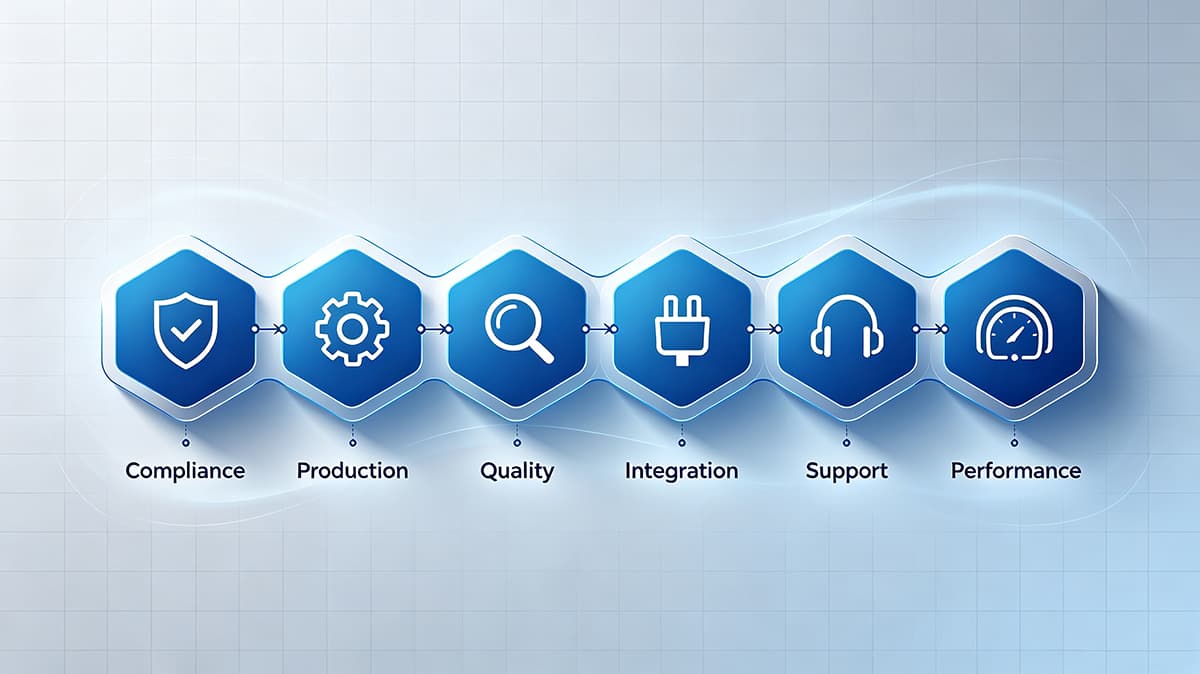
A Six-Part Framework for Evaluating Digital Signage Manufacturers
Part 1: Certifications and Compliance
Certifications are not marketing badges—they are legal prerequisites for selling electronic equipment in regulated markets. Any legitimate digital signage manufacturer should be able to provide the following documentation upon request:
- ISO 9001 (Quality Management System): This certifies that a company has documented procedures for incoming material inspection, in-process quality control, final product testing, and corrective action tracking.
- CE (European Conformity): Mandatory for selling electronic equipment in the European Economic Area.
- FCC (Federal Communications Commission): Confirms that electronic devices meet U.S. standards for electromagnetic interference.
- RoHS (Restriction of Hazardous Substances): Ensures environmental safety by restricting specific hazardous materials in electronic products.
Don't just take a manufacturer's word for it—ask for the actual certificates, including the Declaration of Conformity and supporting test reports from accredited labs.
Part 2: Production Capacity and Infrastructure
A manufacturer's physical footprint and workforce size are strong indicators of scalability. Larger facilities typically support higher output volumes and more complex customizations.
When evaluating a potential digital signage supplier, consider:
- Factory area: Facilities exceeding 3,000 m² are typically better equipped to handle large-scale orders efficiently.
- Workforce size: Companies with over 50 employees generally have more robust production capabilities.
- Automation level: Automated assembly lines indicate consistent quality and faster production cycles.
- Inventory management: Ask about component inventory levels—do they stock common parts, or do they order per production run?
Conduct virtual or on-site audits whenever possible to assess factory conditions, automation levels, and inventory management systems.
Part 3: Quality Assurance and Component Transparency
The best digital signage manufacturers use commercial-grade panels designed to run 24/7 without fading or overheating. Consumer-grade panels (the kind you'd find in a home TV) are not built for the rigors of commercial deployment—they're less durable, have shorter lifespans, and typically come with inferior warranties.
Key quality indicators:
- Panel sourcing: Premium suppliers disclose the origin of key components like LCD/LED panels and processors, ensuring traceability and performance consistency.
- Brightness: For indoor use, look for ≥200 nits. For outdoor or high-ambient-light environments, you'll need at least 2,000+ nits.
- Viewing angles: ≥170° ensures colors don't shift when viewed from the side.
- Failure rate tracking: Ask about historical failure rates from previous shipments.
- Warranty terms: Ideally two years or longer for commercial-grade displays.
Part 4: Software and Integration Capabilities
Hardware is only half the equation. If hardware is the body, software is the brain. The best digital signage manufacturers either develop their own content management system (CMS) or seamlessly integrate with leading CMS platforms.
What to look for:
- CMS compatibility: Evaluate compatibility with your existing content management system. Seamless API integration reduces deployment complexity and lowers total cost of ownership.
- Integration flexibility: Modern digital signage platforms offer various APIs for integration and automation, including REST APIs (HTTP-based, JSON payloads), MQTT for IoT-style real-time device communication, and webhooks for event-driven notifications.
- Deployment options: Look for manufacturers that support both cloud-based and on-premise deployment. Cloud solutions provide flexibility and remote management; on-premise options offer data sovereignty and offline operation capability. The best digital signage suppliers give you the choice.
- Cost transparency: Ask about software licensing fees upfront. Some manufacturers bundle software at no additional cost; others charge per screen or per month.
- Ease of use: Can your team update content without an IT degree? Look for intuitive drag-and-drop interfaces.
What sets leading manufacturers apart: The most integration-friendly digital signage manufacturers offer multiple integration protocols to accommodate different use cases. For example, a retail deployment might use REST APIs to pull real-time inventory data from a POS system, while a smart building application might use MQTT to receive sensor data from IoT devices. Manufacturers that support API, HTTP, and MQTT give system integrators the flexibility to build custom solutions without being locked into a single integration paradigm.
Take Datallen as an example. The company combines self-developed digital signage hardware and management systems to provide system integrators with cost-effective, easy-to-deploy smart solutions. Its integration approach includes:
- Flexible integration methods: Support for API, HTTP, and MQTT protocols, allowing seamless connection with POS, ERP, CRM, and other business systems.
- Deployment flexibility: Both cloud-based and on-premise deployment options to suit different security and operational requirements.
- No separate software licensing fees: The management software is bundled with the hardware, eliminating recurring per-screen costs.
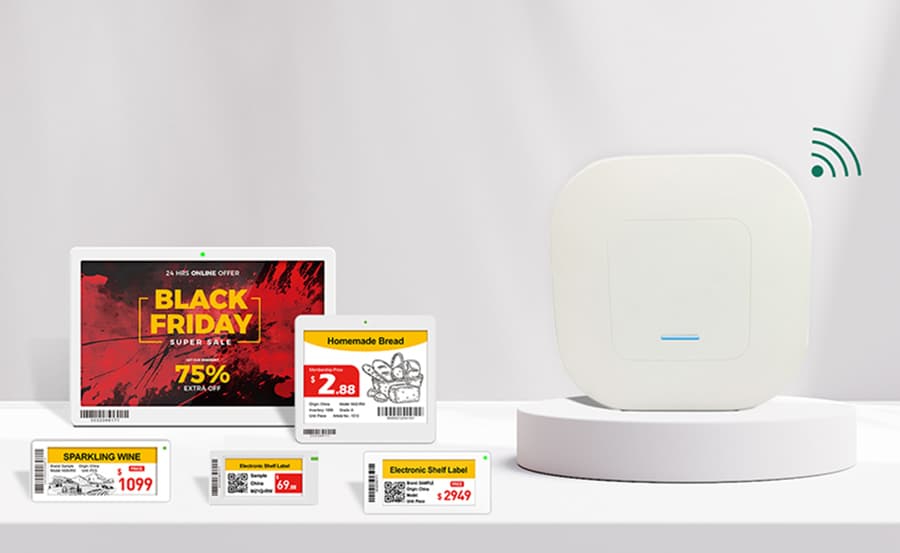
- Unified management: With Datallen's self-developed app, both electronic shelf labels (ESL) and digital signage can be managed effortlessly from a single platform.
This combination of integration flexibility, deployment choice, and cost transparency is exactly what system integrators should look for when evaluating manufacturers.
Part 5: Post-Sales Support and Warranty
Digital signage deployments require ongoing maintenance and software updates. The quality of post-sales support can make or break your deployment.
What "good support" looks like:
- Response time: ≤2 hours reflects strong customer service infrastructure
- Support availability: 24/7 support is essential if you're running high-traffic displays
- Remote diagnostics: The ability to troubleshoot issues without sending a technician on-site
- Warranty terms: Extended warranties (typically 1–3 years) are a sign of manufacturer confidence
- On-site service: For large installations, on-site service capabilities matter
Choose suppliers who offer extended warranties, remote diagnostics, and accessible technical support teams.
Part 6: Performance Metrics That Matter
Objective data provides insight into real-world performance. When evaluating a digital signage supplier, ask for:
- On-time delivery rate: Aim for ≥97% to ensure timely project rollouts
- Average response time: ≤2 hours indicates proactive customer service
- Reorder rate: A rate above 20–25% signals consistent client satisfaction
- Customer reviews: Target average ratings of 4.8/5.0 or higher across verified platforms
These metrics are far more reliable indicators of a manufacturer's reliability than marketing claims or glossy brochures.
Common Questions About Digital Signage Manufacturers (FAQ)
Q: How do I know if a manufacturer is actually legitimate versus a trading company?
Look for verifiable evidence of manufacturing capability: ISO 9001 certification, factory tour opportunities (virtual or in-person), engineering team availability, and transparency about component sourcing. Ask for the specific factory address and verify it exists. A legitimate manufacturer will be proud to show you their operations; a reseller will often be evasive.
Q: Should I choose a global brand or a specialized manufacturer?
It depends on your needs. Global brands like Samsung and LG offer proven reliability and massive scale, but they often come with premium pricing and limited customization. Specialized manufacturers often offer better customization, more responsive service, and more competitive pricing—especially for non-standard form factors or specific industry applications.
Q: What's the difference between commercial and consumer displays—and why does it matter?
Commercial displays are designed for extended operation (24/7), have better warranties, and include features appropriate for commercial environments like professional-grade connectors, higher brightness, and better thermal management. Consumer displays (home TVs) are not built for the rigors of continuous commercial operation and will fail sooner. Never use a consumer TV for professional digital signage deployment.
Q: How important is software integration when choosing a hardware manufacturer?
Extremely important. If your hardware doesn't integrate smoothly with your CMS or other business systems, you'll face deployment complexity, higher total cost of ownership, and limited functionality. Look for manufacturers that offer open APIs or pre-built integrations with leading CMS platforms.
Q: What warranty should I expect from a reputable digital signage manufacturer?
For commercial-grade displays, expect at least 1–3 years of warranty coverage. Longer warranties generally indicate greater manufacturer confidence in their product quality. Also look for warranty terms that cover both parts and labor.
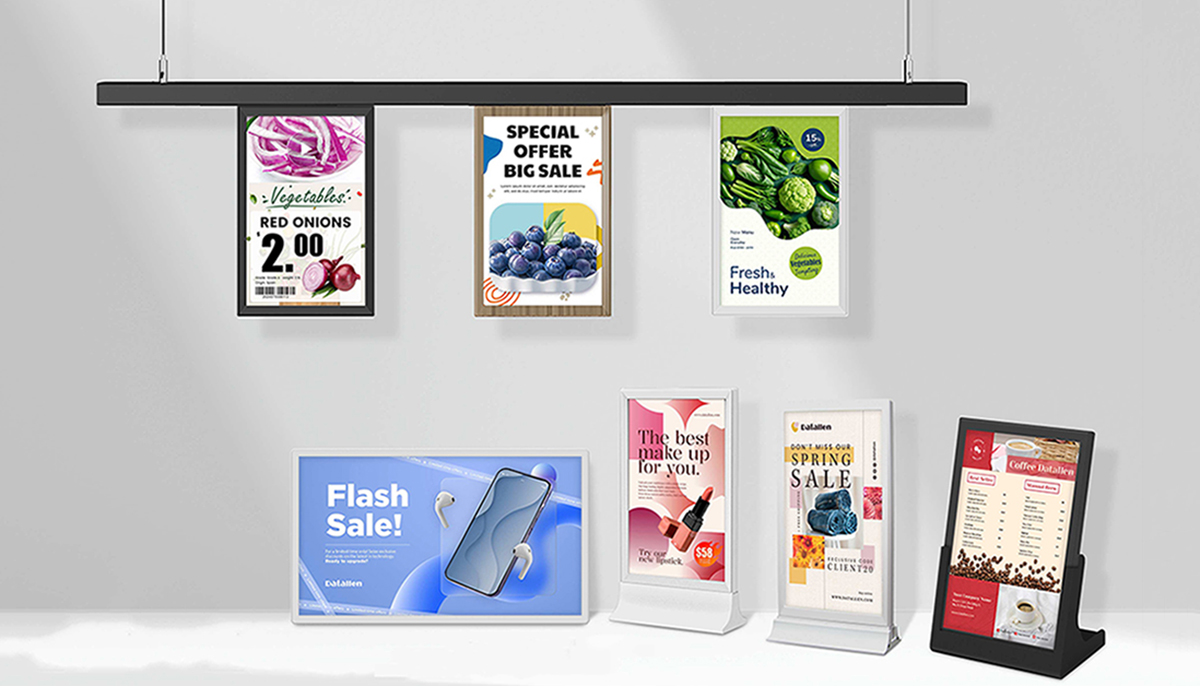
Top Digital Signage Manufacturers to Watch in 2026
The digital signage manufacturing landscape includes a diverse mix of global giants, specialized players, and innovative newcomers. Here are ten manufacturers worth considering, each with distinct strengths:
1. Samsung Electronics
Headquarters: South Korea | Tier: Large
Samsung remains the dominant force in commercial displays, holding the top position in both value and output volume alongside LG. The company's extensive product lineup covers everything from indoor signage to high-brightness outdoor displays. Samsung's strength lies in its vertical integration—it manufactures its own panels, processors, and software ecosystems. Best for enterprise-scale deployments where brand consistency and global support are non-negotiable.
2. LG Electronics
Headquarters: South Korea | Tier: Large
LG is Samsung's closest competitor, with a similar breadth of product offerings and global reach. LG's digital signage portfolio includes OLED displays, LED video walls, and commercial LCD screens. Like Samsung, LG offers integrated solutions combining hardware with its own CMS platforms. Best for projects requiring cutting-edge display technology (particularly OLED) and global logistics support.
3. Sharp NEC Display Solutions
Headquarters: Japan | Tier: Large
Sharp and NEC merged their display businesses to create one of the world's largest commercial display manufacturers. The combined entity offers an exceptionally broad portfolio spanning entry-level to high-end professional displays. Sharp NEC is particularly strong in the corporate, education, and control room verticals. Best for buyers who want the reliability of a top-tier Japanese manufacturer.
4. Daktronics
Headquarters: United States | Tier: Large
Daktronics is the dominant player in large-format LED displays, particularly for sports venues, outdoor advertising, and transportation hubs. Unlike most competitors that focus on LCD technology, Daktronics specializes in LED video walls and scoreboards. Best for large-scale outdoor installations and sports/entertainment venues.
5. Planar Systems (Leyard)
Headquarters: United States | Tier: Medium-Large
Planar, owned by Leyard, is a leading manufacturer of direct-view LED displays and LCD video walls. The company is known for high-end, visually stunning displays used in corporate lobbies, broadcast studios, and luxury retail. Planar's strength is in premium visual quality and design aesthetics. Best for high-end corporate and retail environments where image quality is paramount.
6. BrightSign
Headquarters: United States | Tier: Medium
BrightSign is the market leader in digital signage media players, powering everything from simple single-screen deployments to complex multi-screen installations. While BrightSign doesn't manufacture displays, its media players are the backbone of countless digital signage networks worldwide. The company's players support a wide range of content formats and CMS platforms. Best for system integrators building custom signage solutions.
7. PPDS (Philips Professional Display Solutions)
Headquarters: Netherlands | Tier: Medium
PPDS, the professional display arm of Philips, offers a comprehensive range of digital signage displays from entry-level to premium. The company recently launched the Philips Signage 2000 Series, which brings professional-grade features to more accessible price points. PPDS is known for balancing quality with affordability. Best for mid-budget multi-location deployments.
8. SpinetiX
Headquarters: Switzerland | Tier: Medium
SpinetiX develops versatile media players designed for 24/7 mission-critical operation, along with a purpose-built signage OS. The company has formed partnerships with display manufacturers including Sharp NEC to offer out-of-the-box signage solutions. SpinetiX is particularly strong in IoT integration, supporting MQTT and REST APIs for smart building and sensor-driven applications. Best for system integrators building connected, data-driven signage networks.
9. Datallen
Headquarters: China (Guangdong) | Tier: Medium
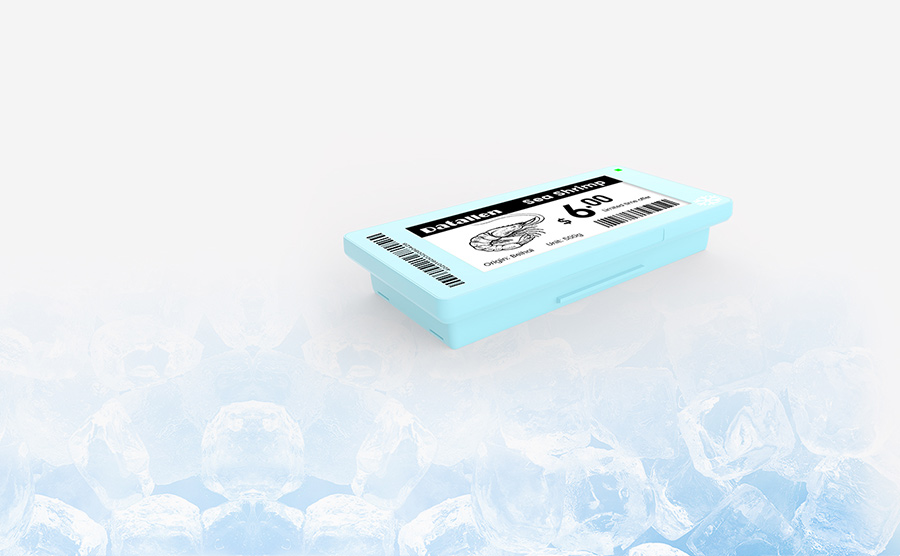
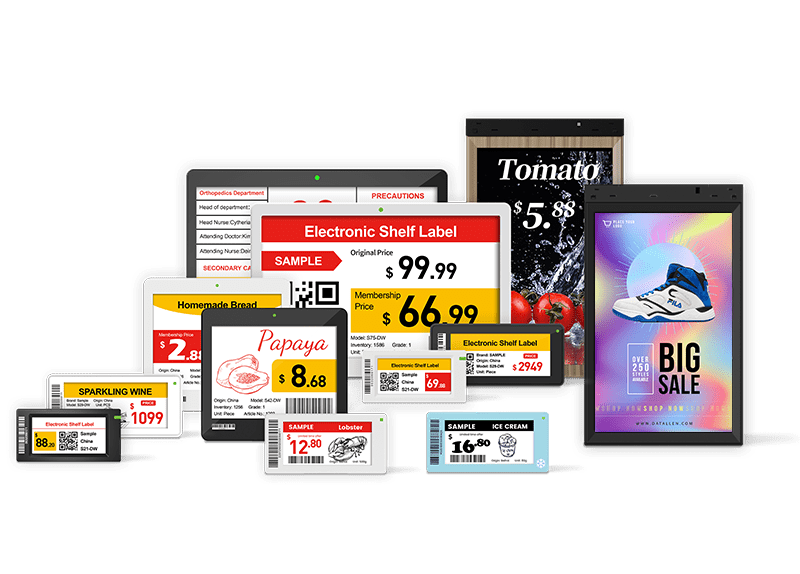
Datallen, a brand under Sunlux Enterprises, leverages 20 years of expertise in wireless technology. The company focuses on R&D and manufacturing of electronic shelf labels and digital signage products, covering hardware, software, and services. Operating in over 80 countries and regions, Datallen's solutions span retail, office, warehousing, healthcare, transportation, and other sectors.
Key strengths:
- 24/7 operation capability: Datallen's digital signage runs without interruption, designed for maximum uptime and minimal maintenance.
- Integration flexibility: Support for API, HTTP, and MQTT protocols, plus integration with POS, ERP, and CRM systems.
- Deployment options: Both cloud-based and on-premise deployment.
- Cost efficiency: Management software bundled with hardware—no separate licensing fees.
- Unified management platform: Single app for managing both ESL and digital signage.
Best for system integrators and retailers seeking cost-effective, easy-to-deploy smart solutions with flexible integration options.
10. CAYIN Technology
Headquarters: Taiwan | Tier: Medium
CAYIN Technology is a 22-year professional digital signage solution and software developer from Taiwan. The company welcomes system integrators and device manufacturers to install its digital signage solutions on their products. CAYIN is known for its software-first approach and partner-friendly business model. Best for system integrators looking for flexible software solutions to pair with their own hardware.
Emerging Trends Shaping the Digital Signage Manufacturing Industry
Understanding where the industry is heading will help you choose a manufacturer that can support your needs not just today, but five years from now.
AI-Driven Content Optimization and Personalization. Artificial Intelligence is being leveraged to examine audience demographics, behavior, and contextual information in real time, dynamically modifying content on digital screens. This increases the relevance and efficiency of messages, driving higher engagement rates.
IoT and Sensor Integration. The intersection of digital signage with the Internet of Things enables screens to react in real time to environmental inputs. IoT sensors can monitor foot traffic, stock levels, weather, or even mood, allowing digital signage to change content in response.
Cloud-Based Content Management Systems. The migration to cloud-based CMS solutions provides unprecedented flexibility, scalability, and remote management options. This lowers operational costs, eases multi-site deployment, and keeps content up-to-date and in sync at all times.
From Silos to Systems. The age of standalone digital signage is officially over. Robust digital signage networks with real-time data integration and intelligent content management are now commonplace.
Sustainability and Energy Efficiency. As energy costs rise and environmental regulations tighten, manufacturers that prioritize energy-efficient designs and sustainable materials will have a competitive advantage.
When evaluating digital signage manufacturers, ask about their roadmap for incorporating these trends. A manufacturer that's investing in AI, IoT integration, and cloud-based management today is more likely to support your needs tomorrow.
Conclusion
Choosing the right digital signage manufacturer is one of the most important decisions you'll make in your digital signage deployment. A poor choice can lead to failed screens, unreliable support, and wasted investment. A good choice delivers years of reliable service, responsive support, and the flexibility to adapt as your needs evolve.
For more insights, check out:
1. How to Choose Retail Store Digital Signage Solutions: Total Cost & Key Considerations
2. How Modern Supermarket Advertisement Drives Sales: Strategies, Tech & Measurable Tactics
3. How to Create Effective Retail Store Advertising?
4. The Importance of Digital Transformation in the Retail Industry
5. POP Marketing Mastery: How Point of Purchase Materials in Retail Drives Sales